
Why Material Selection Matters for Chemical Tubing
Chemical resistant tubing looks straightforward until you have to choose it for a real process. On paper, many materials appear suitable. In practice, the wrong tubing can lead to contamination, swelling, embrittlement, premature failure or repeated replacement that no one budgeted for. In harsh environments, tubing is not a minor accessory. It is part of the process integrity.
That is why material selection matters so much. Engineers and buyers choosing tubing for aggressive chemicals, elevated temperatures, sensitive fluids or demanding cleaning regimes need to think beyond simple compatibility charts. The best tubing decision comes from understanding the whole operating environment: media, temperature, pressure, flexibility, purity requirements, routing constraints and expected service life.
In fluoropolymer tubing, the most common materials under consideration are FEP, PFA, PTFE and ETFE. Each offers useful properties, but each has its own strengths. Choosing well means knowing what problem the tubing has to solve.
FEP Tubing: Clarity, Flexibility and Chemical Resistance
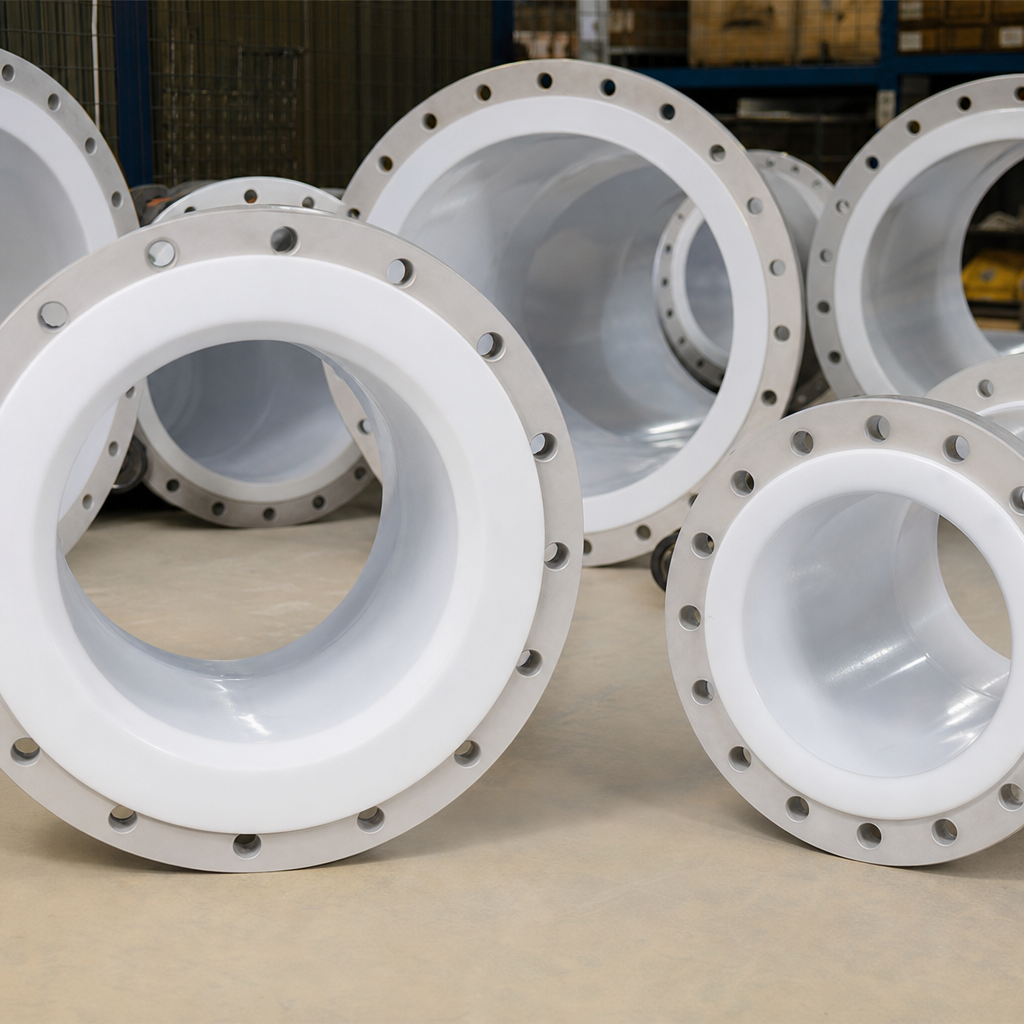
Start with chemistry. The obvious reason to use fluoropolymer tubing is chemical resistance. These materials are valued because they stand up to media that attack many conventional plastics and metals. Acids, solvents, corrosive liquids and demanding process chemicals can all push buyers toward fluoropolymers. But resistance alone is not enough. The application may also need clarity, flexibility, high purity, temperature capability or mechanical toughness.
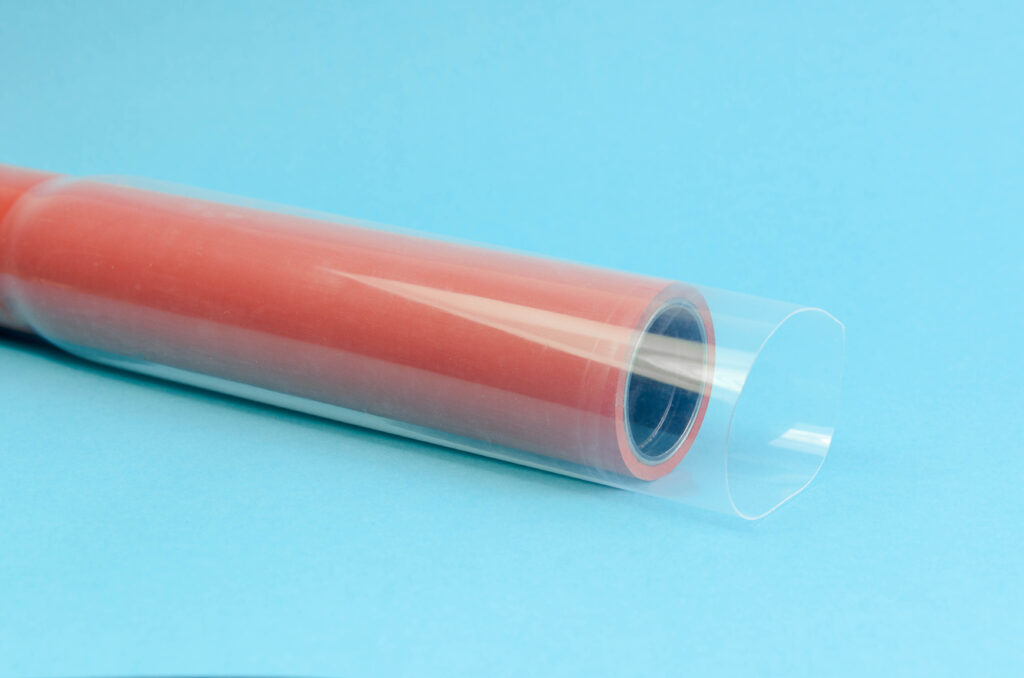
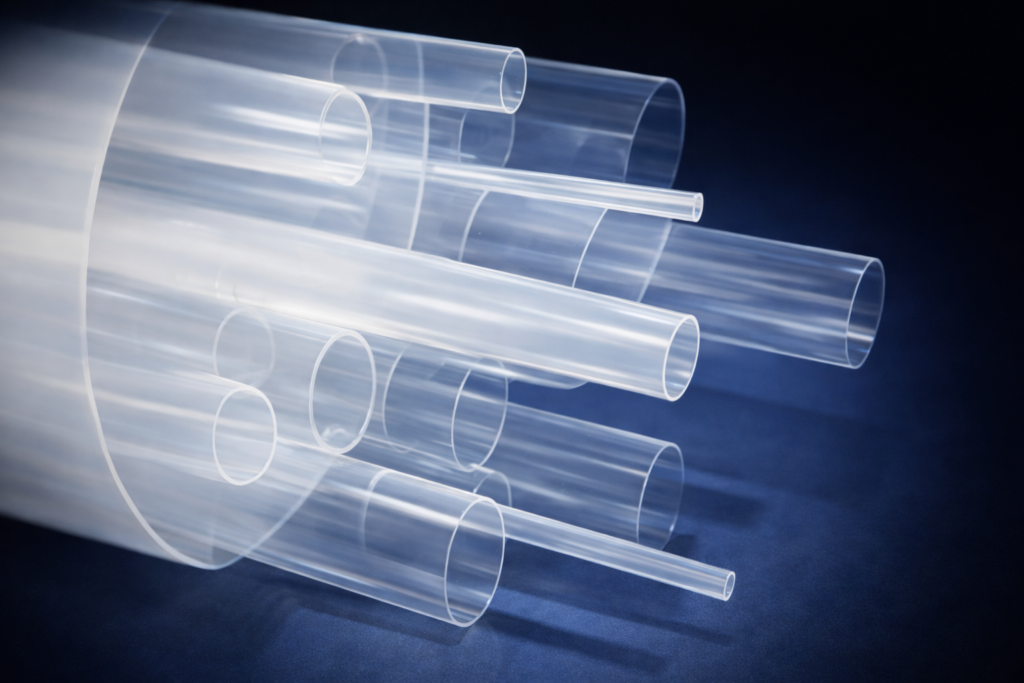
FEP is often selected when the process needs a strong combination of chemical resistance, transparency and workable flexibility. Clear tubing can be useful where visual flow monitoring matters, and FEP is widely appreciated for that reason. It also performs well in many chemically aggressive environments and is used across industrial, laboratory and process applications where clean handling and visibility are important.
PFA Tubing: Premium Performance for Demanding Duties
PFA usually enters the conversation when temperature, purity and chemical performance all matter at a high level. It is often regarded as a premium fluoropolymer tubing material for demanding process duties. If the system involves harsher thermal conditions, stricter cleanliness expectations or more severe chemical exposure, PFA may justify its place. In high purity industries and difficult process environments, this can be a decisive advantage.
The comparison between PFA and FEP tubing is one of the most common discussions in fluoropolymer specification. Both are excellent materials, but their performance profiles suit different applications. Understanding those differences is key to making the right selection.
PTFE and ETFE: When Temperature or Toughness Lead the Requirement
PTFE remains a major reference point because of its broad resistance and high temperature capability. It is often used where flexibility is less critical than chemical stability and thermal performance. PTFE tubing can be an excellent choice in static or semi static applications where the tubing must tolerate severe media and heat. Its well established industrial reputation means many engineers are already comfortable specifying it.
ETFE offers a different balance. Compared with some fluoropolymers, it is often valued for mechanical toughness alongside very good chemical resistance. In applications where abrasion, handling or structural resilience matter more, ETFE may be the stronger candidate. It can be a useful option where the environment is harsh not only chemically, but physically.
How to Choose: A Practical Decision Framework
So how do you choose between them? The first filter is the chemical environment. Compatibility data is the starting point, not the end. You need to know the exact media, concentration and temperature. A material that tolerates a chemical at room temperature may behave very differently at elevated temperature or over long exposure. This is where many rushed tubing decisions go wrong.
The second filter is temperature. Tubing often fails not because the chemical choice was wrong in theory, but because the service temperature was underestimated. Process upsets, hot cleaning cycles, external heat sources and ambient conditions all matter. PFA and PTFE are often favoured where thermal demands are higher, while FEP may still be ideal in many moderate high temperature applications. The point is to match the tubing to the full temperature reality, not the nominal operating point.
The third filter is purity and contamination control. In pharmaceutical, analytical, semiconductor adjacent or high cleanliness industrial settings, the tubing has to do more than survive. It has to remain clean, stable and suitable for sensitive fluids. Smooth internal surfaces, resistance to extractables and compatibility with cleaning regimes become central. This is one reason PFA often gains ground in more demanding purity led applications.
The fourth filter is visibility. Do operators need to see flow, bubbles, product condition or cleaning state inside the line? If so, transparent tubing has obvious value. FEP is often attractive here because it combines visibility with strong chemical resistance. In some systems that transparency is operationally useful rather than merely convenient.
The fifth filter is mechanical demand. Tubing may be routed through tight spaces, flexed during maintenance, exposed to abrasion or expected to withstand handling in awkward industrial environments. ETFE can be relevant where toughness is important. Wall thickness, support and bend radius also matter. Good tubing selection is about the product form as much as the polymer family.
Why Bespoke Fluoropolymer Extrusion Capability Matters
A useful way to approach the choice is through a simple hierarchy of needs. If the application prioritises visual clarity and good chemical resistance, FEP is often a strong starting point. If it prioritises the highest levels of purity, chemical resistance and elevated temperature capability, PFA usually deserves close attention. If it needs proven high temperature resistance and broad chemical performance in a more traditional industrial format, PTFE may be the answer. If the balance shifts toward mechanical resilience, ETFE can be highly attractive.
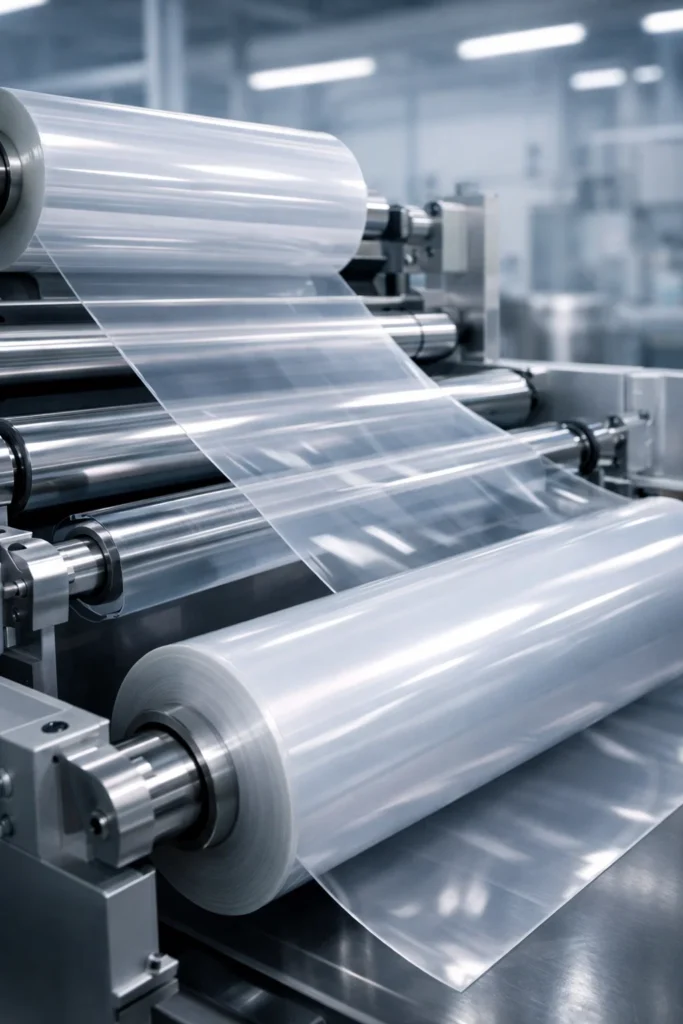
Holscot’s fluoropolymer extrusion capability is especially relevant in this area because tubing selection often becomes a dimensional and manufacturing issue as well as a material one. Standard catalogue tubing may not always fit the process. Bespoke sizes, wall thicknesses and specialist forms can make the difference between an acceptable solution and a genuinely robust one. With fluoropolymer extrusions across FEP, PFA and ETFE, Holscot can support users who need more than an off the shelf assumption.
In harsh environments, the cost of choosing wrongly usually shows up later. Lines degrade. Maintenance increases. Product quality becomes inconsistent. Unplanned replacements begin to feel normal. Good tubing selection prevents that by treating tubing as part of the engineered system rather than a disposable accessory.
For engineers and procurement teams, the best approach is disciplined and practical. Define the media accurately. Review the real temperature range. Consider purity, visibility and mechanical handling. Then choose the fluoropolymer that matches the duty, not the one that happens to be most familiar. In harsh chemical service, that level of care is rarely excessive. It is what keeps the process under control.
For specialist fluoropolymer tubing in FEP, PFA or ETFE, contact Holscot to discuss your application requirements.