
In industrial environments, equipment failure is rarely caused by a single catastrophic event. More often, it results from gradual material degradation driven by chemical exposure, temperature variation and repeated cleaning cycles. When polymers are incorrectly specified, this degradation can accelerate, leading to leaks, contamination, downtime and costly replacement.
This article explains how chemical resistance directly influences polymer performance, why fluoropolymers are often specified in aggressive environments, and how material choice can reduce the risk of premature equipment failure.
Why Chemical Resistance Matters in Industrial Systems
Chemical resistance refers to a material’s ability to withstand exposure to corrosive substances without losing its mechanical, thermal or structural properties. In practice, this resistance affects far more than surface appearance.
When polymers degrade chemically, common failure modes include:
- Swelling or softening of components
- Cracking, embrittlement or loss of flexibility
- Increased friction or surface contamination
- Reduced dimensional stability
These issues can compromise seals, tubing, linings and protective components long before visible damage is obvious.
Common Causes of Polymer Degradation
Many equipment failures attributed to “wear and tear” are actually the result of chemical incompatibility. Typical contributors include:
- Continuous exposure to acids, solvents or cleaning agents
- Elevated operating temperatures accelerating chemical reactions
- Repeated sterilisation or washdown cycles
- Combined mechanical stress and chemical attack
Even materials that perform well in short-term testing may degrade rapidly under sustained exposure if chemical compatibility has not been properly assessed.
Why Fluoropolymers Perform Differently
Fluoropolymers are widely specified in chemically aggressive environments due to the strength of their carbon–fluorine bonds. This molecular structure gives them a high level of inertness compared to many conventional plastics.
Key performance advantages include:
- Broad chemical compatibility
- Low permeability and absorption
- Resistance to oxidation and ageing
- Stable performance across wide temperature ranges
Holscot Advanced Polymers Limited supplies fluoropolymers in multiple formats, allowing chemical resistance requirements to be addressed at both component and system level. You can explore Holscot’s fluoropolymer product range to understand how different materials are supplied for industrial use.
Chemical Resistance in Real Applications
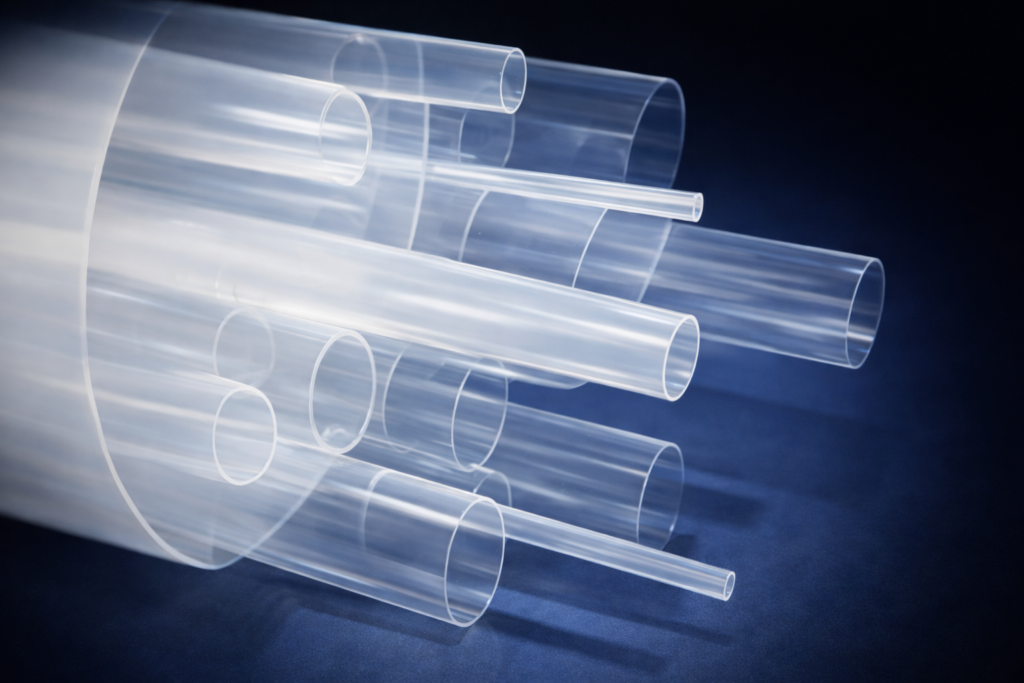
Tubing and Extrusions
In fluid transfer systems, chemical exposure combined with pressure and temperature cycling can quickly degrade incompatible materials. Fluoropolymer extrusions are often selected to reduce the risk of cracking, contamination and leaks in chemical handling applications.
Holscot’s fluoroplastic extrusion solutions support applications where consistent internal surfaces and chemical stability are critical.
Films, Sheets and Linings
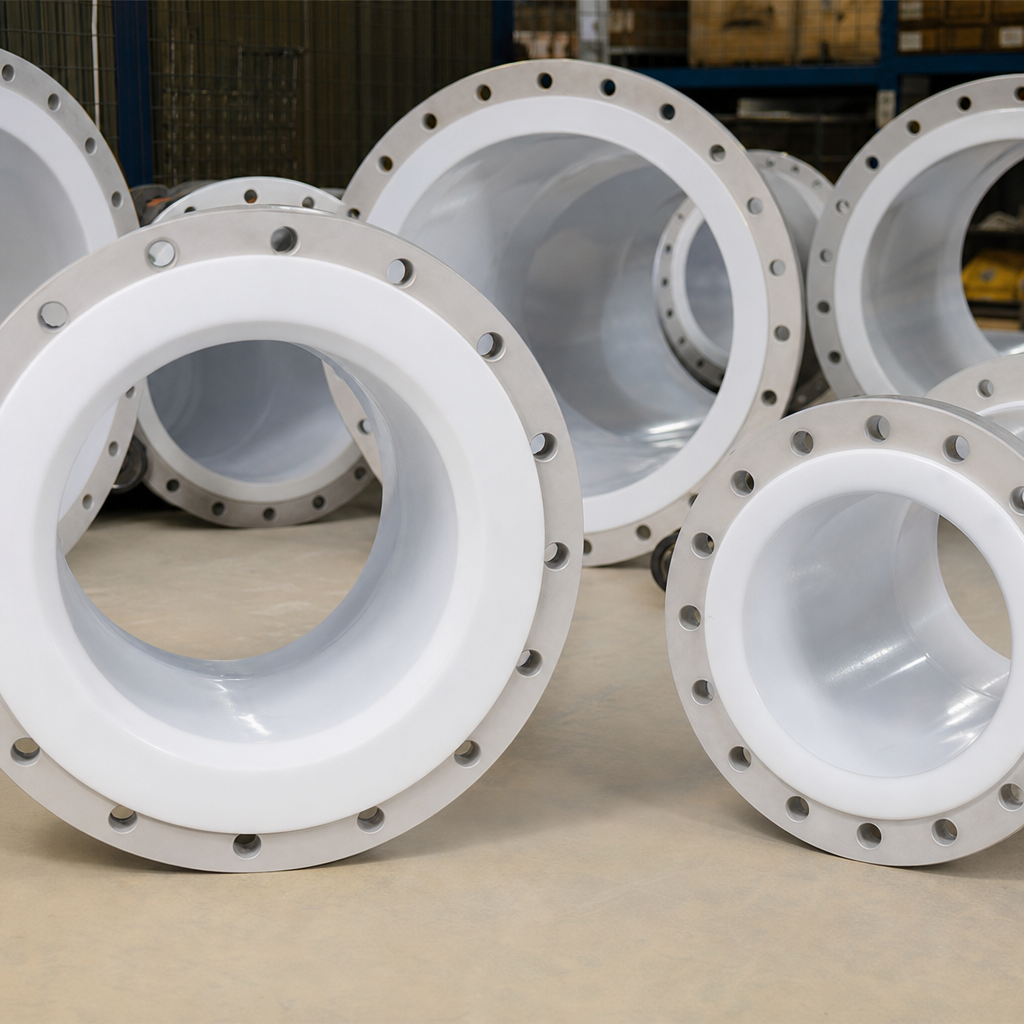
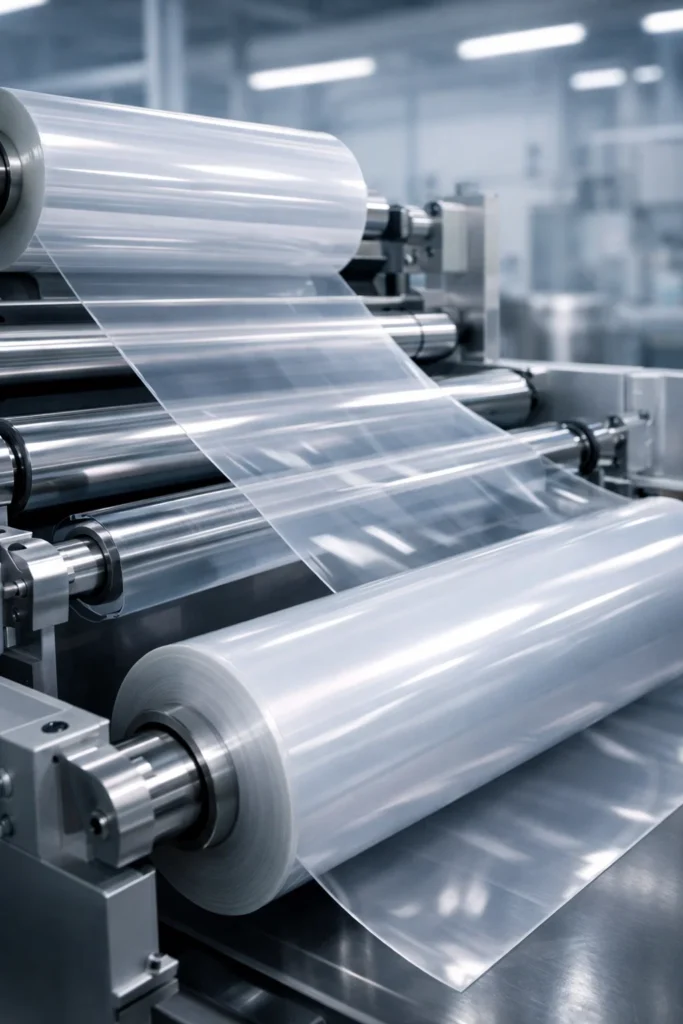
Where equipment requires internal protection rather than flexible tubing, fluoropolymer films and sheets are commonly used as liners or barriers. These materials help isolate structural components from corrosive substances while maintaining cleanability and dimensional stability.
For these applications, fluoropolymer films and sheets provide a reliable solution in tanks, trays, housings and processing equipment.
Protective Sleeving and Light Protection
Chemical resistance is also important in secondary protection systems. In lighting and electrical installations, exposure to cleaning agents, vapours or process chemicals can degrade standard plastics.
Fluoropolymer-based solutions are often used in shatter-resistant lamp protection systems to maintain safety and compliance in industrial environments.
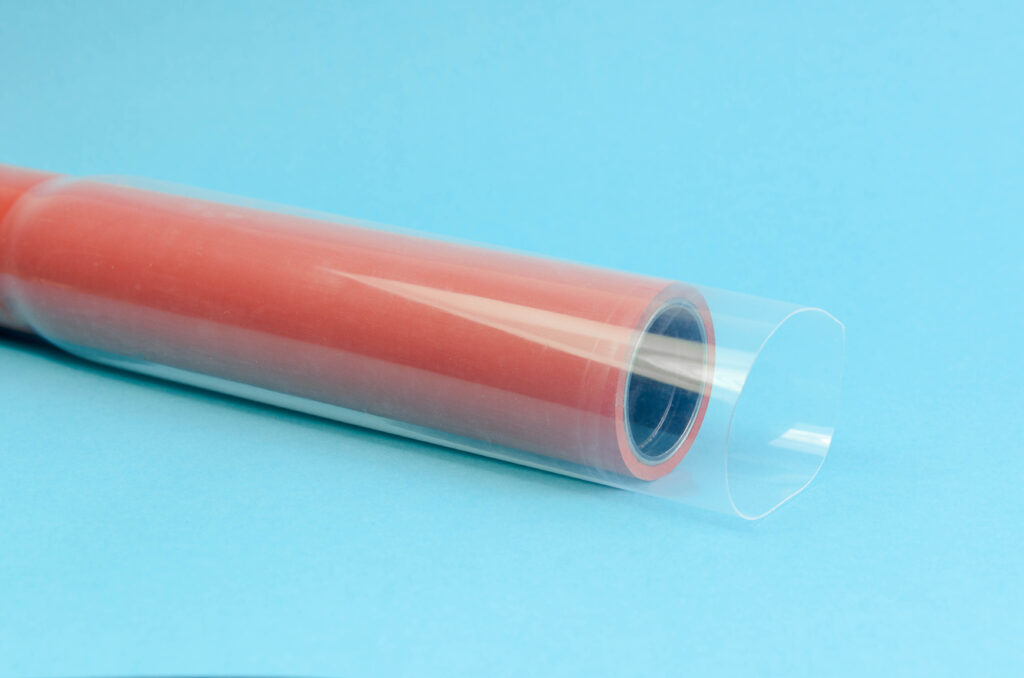
Similarly, heat-shrink fluoropolymer sleeving is used to provide close-fitting protection where chemical exposure and thermal stability are both concerns.
The Hidden Cost of Incorrect Material Selection
When chemical resistance is overlooked, the cost is rarely limited to component replacement. Secondary impacts often include:
- Unplanned downtime
- Contamination risks
- Increased maintenance schedules
- Compliance or safety failures
In regulated or high-throughput environments, these risks can outweigh any initial material cost savings.
Improving Reliability Through Informed Material Choice
Reducing equipment failure begins with understanding the chemical environment a component will face throughout its service life. This includes not only the primary process chemicals, but also cleaning agents, temperature fluctuations and mechanical stress.
By selecting fluoropolymers that are compatible with these conditions, it is possible to extend service life, reduce maintenance and improve overall system reliability.
Holscot Advanced Polymers Limited supports this process by supplying chemically resistant polymers in extruded, film, sheet and sleeving formats, enabling solutions to be tailored to real operating demands. Further technical insight is available when you view the full scope of Holscot’s fluoropolymer capabilities.
Final note
This article is intended as an educational overview. Material selection should always be validated against specific chemical exposure, operating conditions and performance requirements.