
PFA is the fluoropolymer that engineers tend to reach for when nothing else quite does the job. It handles the same temperatures as PTFE and resists almost the same range of chemicals, yet it can be melted, extruded, welded and shrunk into shape. That combination is why it turns up in semiconductor fabs, chemical plants and heat exchangers where failure is expensive.
It is also one of the less understood materials in the family. PTFE and FEP are well known, but PFA material often gets lumped in with them, or confused with PFAS, the wider group of chemicals now under regulatory review.
This guide explains what PFA is, what it is used for, and how it really compares with PTFE. We extrude PFA tubing, make PFA heat shrink sleeving and use PFA for linings and coatings at Holscot, so the comparisons here come from day to day work with both materials rather than data sheets alone. If you are trying to decide whether PFA is worth its higher price for your application, the answer depends on how the part is made and what it has to put up with, and we cover both below.
What Is PFA?
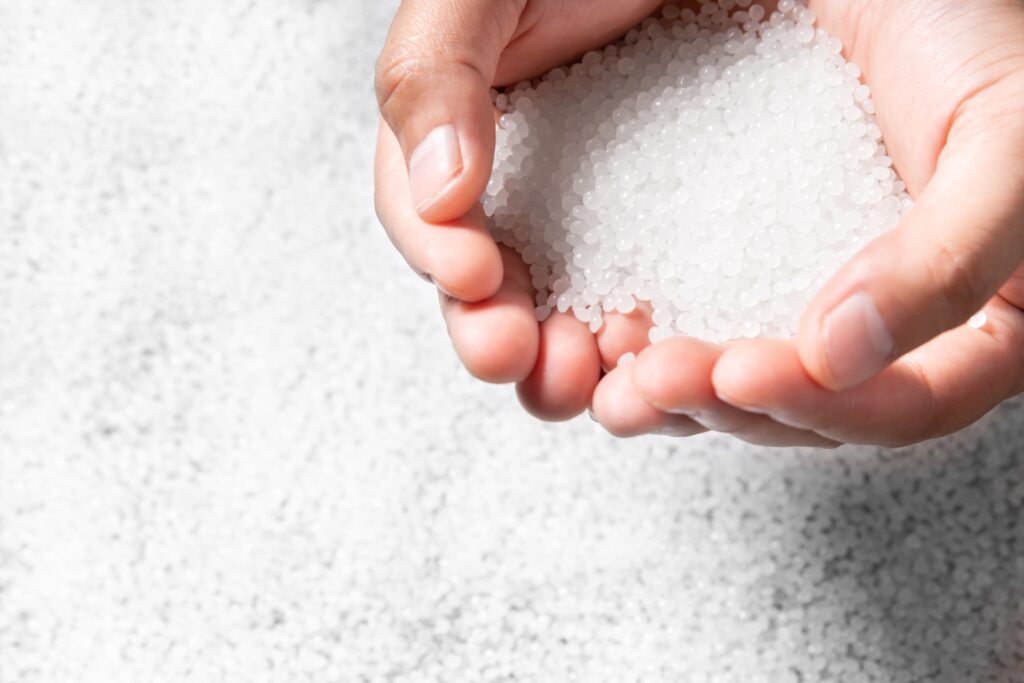
PFA stands for perfluoroalkoxy, and its full chemical name is perfluoroalkoxy alkane. It is a fluoropolymer made by combining tetrafluoroethylene, the building block of PTFE, with a small amount of a perfluorinated ether. Those ether side groups break up the regular structure just enough to let the polymer flow when it melts.
What kind of material is PFA?
PFA is a thermoplastic fluoropolymer. Like PTFE, its backbone is made of carbon atoms surrounded by fluorine. This is what gives it outstanding chemical resistance and a non-stick surface. Unlike PTFE, it is melt processable, so it can be shaped with the same kinds of equipment used for other plastics, although at much higher temperatures.
It was introduced commercially in the early 1970s, specifically to give engineers PTFE level performance in a material that could be extruded and moulded.
Is PFA the same as PTFE?
No, although they are close relatives. Both are fully fluorinated and share very similar heat and chemical resistance. The difference lies in the side groups on the PFA chain, which let it melt and flow. PTFE does not flow when it melts, so it has to be pressed and sintered instead.
That one difference has a big effect on what each material can be made into, how smooth and dense the finished surface is, and how much it costs.
What is PFA tubing made of?
PFA tubing is made entirely from PFA resin, melted and extruded through a die to form a continuous tube. Because the material is melt processed, the tube wall is solid and free of the tiny voids found in sintered PTFE. We explain the tubing itself in more detail in our article on what PFA tubing is.
What Is PFA Used For?
PFA is used where a part needs PTFE level heat and chemical resistance but has to be made by melting, extruding or welding. It is also chosen where purity matters, because its smooth, dense surface traps very little and releases almost nothing into the fluid.
Semiconductor and high purity processing
Chip makers use ultra pure acids and solvents. Even tiny traces of metal or particles can ruin a batch of wafers. PFA tubing, fittings, valves and tanks carry these chemicals because they add almost nothing to them. The same reasoning applies in pharmaceutical and laboratory work.
Chemical linings and heat exchangers
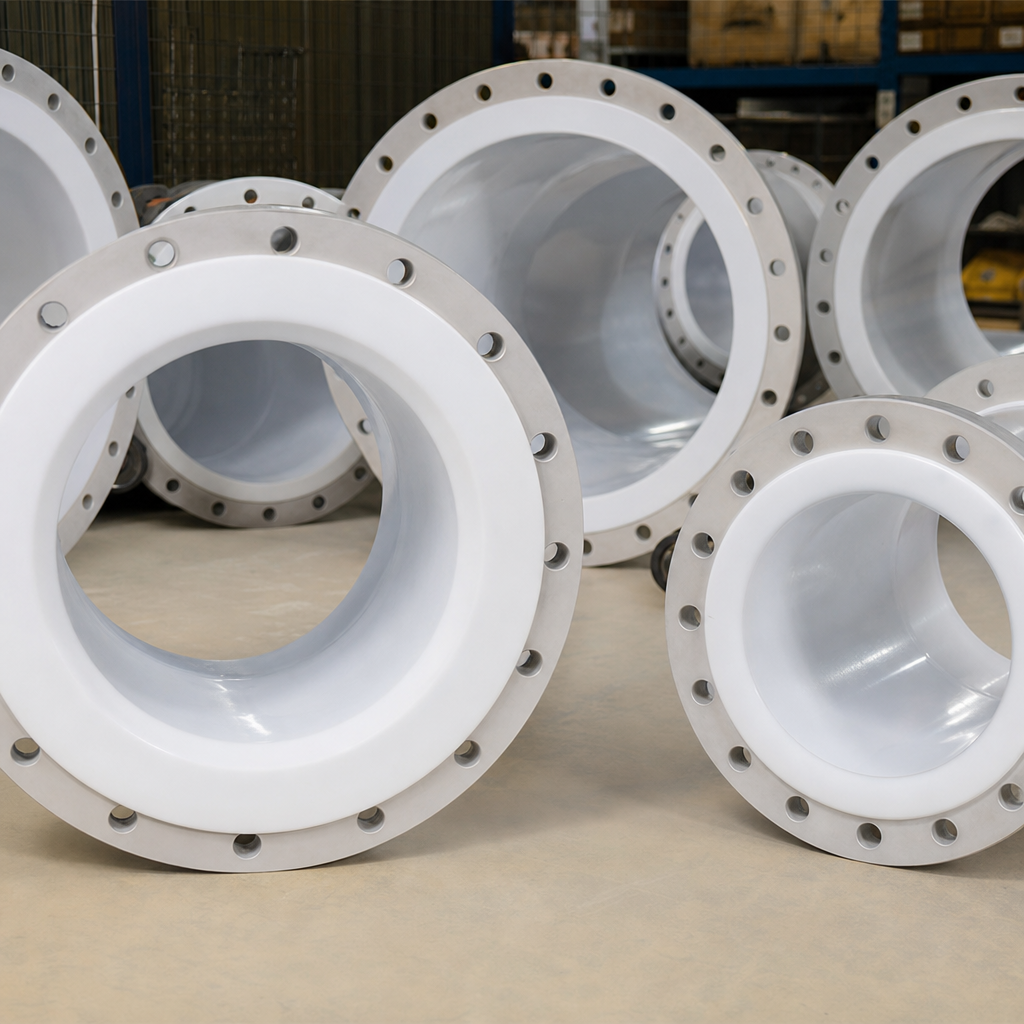
PFA is widely used to line pipes, valves, pumps and vessels that handle hot, corrosive chemicals. In flue gas desulphurisation, for example, the fumes passing through the heat exchanger can be above 200°C and highly corrosive. Covering the coolant bars and internal structure in PFA protects the metal far longer than bare steel would last.
Heat shrink sleeving and roll covers
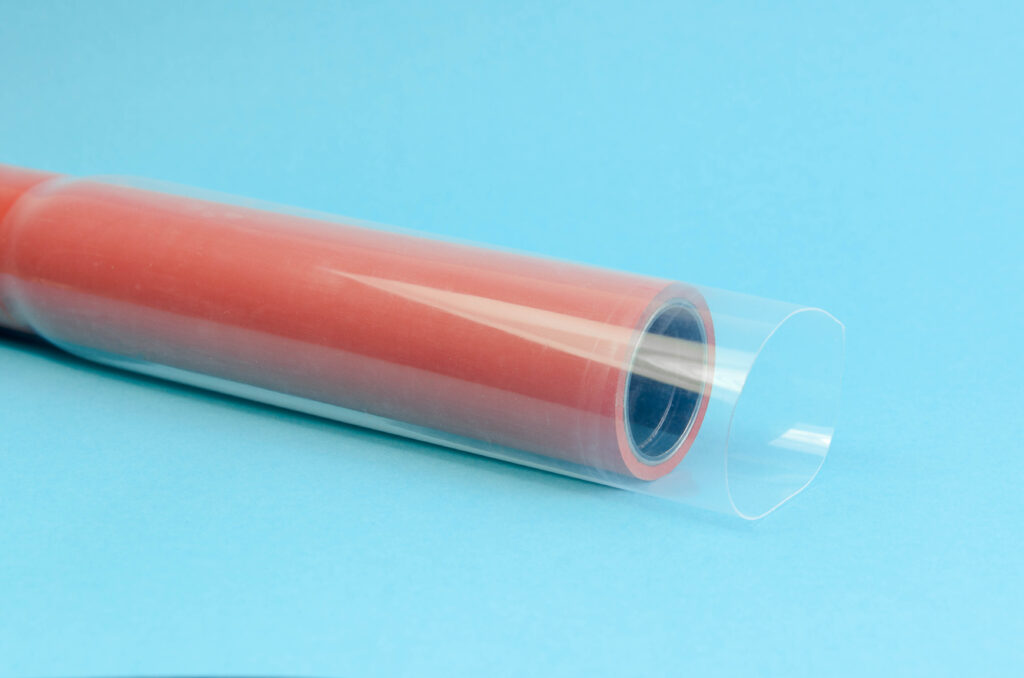
PFA can be extruded as tubing and then expanded so it shrinks tightly back down when heated. That makes it ideal for covering heated rollers in printing, coating and food processing, where FEP would be running too close to its own limit. Our PFA heat shrink sleeving is designed for exactly these hotter duties.
We make PFA heat shrink sleeving in standard wall thicknesses of 0.5mm, 0.6mm and 1.5mm, with outside diameters from 25mm up to 450mm and above. Because we extrude the base tubing ourselves, we can also produce custom sizes and wall thicknesses. Sleeves can be etched on the inside or outside for adhesive bonding.
Wire insulation and encapsulation
PFA makes a thin, tough insulation for wire and cable that has to work at high temperatures. It is also used to encapsulate seals and components, giving a continuous, one-piece jacket that keeps aggressive chemicals away from the material underneath.
PFA Material Properties
Temperature range
PFA has a continuous service temperature of around 260°C, the same as PTFE and roughly 60°C higher than FEP. Its melting point is around 305°C. It also stays flexible at very low temperatures, so it suits cryogenic duties as well as hot ones.
Chemical resistance
PFA resists almost every chemical used in industry, including strong acids, alkalis and solvents, even at high temperatures. The handful of exceptions, such as molten alkali metals and some fluorinating agents, are the same ones that attack PTFE.
Purity and permeation
Because PFA is melted rather than sintered, the finished material is solid and smooth. Sintered PTFE contains microscopic voids, which can let gases and some chemicals permeate more easily and can trap contamination. For high purity work, and for linings where permeation matters, this gives PFA a real advantage.
Mechanical properties
PFA has good flex life and better creep resistance than PTFE at high temperatures. As a result, it holds its shape better under load when hot. It is not as tough or abrasion resistant as ETFE, though, and it is softer than engineering plastics such as PEEK.
Which Is Better, PFA or PTFE?
Neither is better across the board. They have almost the same heat and chemical resistance, so the choice comes down to how the part is made, how pure it needs to be, and what you are prepared to pay.
When PFA is the better choice
Choose PFA when the part has to be extruded, welded, heat shrunk, moulded or thermoformed, which PTFE cannot do in the normal way. PFA is also the better choice for high purity systems and for linings where you want the lowest possible permeation. Tubing, sleeving, lined fittings and moulded components are typical PFA parts.
When PTFE is the better choice
PTFE is usually cheaper and has a slightly lower coefficient of friction. It is the natural choice for machined parts, gaskets, seals, bearings and solid blocks, where its inability to melt process does not matter. It is also widely used as a coating and as thread seal tape.
Where FEP fits in
FEP is the third option, and often the most economical. It is melt processable like PFA, and very clear, but it is limited to around 200°C. If your application stays comfortably below that, FEP usually gives the best value. Our guide to PFA vs FEP tubing sets out that comparison in detail.
Is PFA worth the extra cost?
PFA costs considerably more than PTFE and FEP. It earns that price when the combination of high temperature, aggressive chemicals and a melt processed shape cannot be met any other way. When a lined component or roll cover lasts years and meets the demands of the job, the material cost soon becomes the smaller part of the sum.
How PFA Parts Are Made
Working with PFA takes more care than working with everyday plastics. It melts at around 305°C, so extrusion and moulding equipment has to run much hotter.
Extrusion
Most PFA parts start as extrusions. Molten PFA is extruded form tubing, rod or profiles in continuous lengths. Wall thickness and diameter have to be held closely, because tubing often has to fit compression fittings or be expanded into heat shrink sleeving afterwards.
Heat shrink sleeving
To make heat shrink sleeving, extruded tubing is expanded to a larger diameter. When it is slid over a roller or component and heated again, it can shrink back tightly. This gives a close fitting, hard wearing cover. Further to this the ID (inside diameter) can be etched to create a surface where bonding can be possible, Holscot offers this expertise as part of its full service offering.
Welding, lining and forming
Because PFA melts and flows, sheets and film can be welded to build linings, bags and larger panels. Sheet can also be thermoformed into shapes. This is something PTFE cannot do in the normal way, and it is one of the main reasons PFA is chosen for lined vessels and formed parts.
Frequently Asked Questions
What is the full form of PFA?
In materials engineering, PFA stands for perfluoroalkoxy, or perfluoroalkoxy alkane in full. It belongs to the fluoropolymer family alongside PTFE, FEP and ETFE.
The letters PFA are used for many other things outside engineering. This is why searches for the term often return unrelated results. In plastics and chemical processing, it always refers to the fluoropolymer.
Is PFA toxic?
Solid PFA is very stable and inert in normal use. This is why it is used for food contact, pharmaceutical and high purity applications. It does not react with the chemicals it carries and releases nothing into them.
Like all fluoropolymers, PFA can break down when if it is heated beyond its rated temperature, for example in a fire. Keeping within its service temperature and using proper extraction during fabrication is important.
What is the difference between PFA and PFAS?
PFA is one specific material, a fluoropolymer. PFAS is a very broad group of tens of thousands of fluorinated chemicals. This group includes the small, mobile substances that have raised environmental concerns.
Under the broadest definitions, fluoropolymers such as PFA fall within the PFAS family, but they are at the far end of the PFAS spectrum being large, stable polymers with a very different risk profile. Regulators in the UK and Europe are looking at how they should be treated. Our article on PFAS regulations and what they mean for fluoropolymer users covers where things stand.
Talk to Holscot About PFA
PFA material gives you PTFE level heat and chemical resistance in a form that can be extruded, welded and shrunk to fit. It is the right choice for high purity systems, hot chemical linings and roll covers that run too hot for FEP. Where a simple machined part will do, PTFE is usually cheaper, and below 200°C FEP often gives the best value.
We extrude PFA tubing and film and make PFA components to order. Browse our fluoroplastic extrusions, or contact the Holscot team to talk through whether PFA is the right fit for your application.