Most discussion of dangerous goods packaging begins on the outside. What class the substance falls into, what the UN marking has to say, which outer container is approved for it, how it is labelled and documented. All of that is necessary and none of it addresses the question that actually determines whether the packaging survives the journey, which is what happens at the point where the chemical touches the container.
That interface is the subject of this article. Not the drum, the box or the IBC, but the barrier inside it, and the reason so many high value or high hazard liquids end up sitting behind a fluoropolymer film rather than against the wall of the container carrying them. The decision is rarely made for the sake of elegance. It is made because the alternative has already failed somewhere, and the cost of that failure was disproportionate to the price of a liner.
What Dangerous Goods Packaging Is Actually Being Asked to Do
The regulatory framework is clear enough in outline. Substances are classified by hazard, packaging is tested and certified against defined performance standards, and packagings that pass carry a UN marking stating what they are approved to hold. It is a system that works, and the volume of enquiries around UN certified packaging for dangerous goods shows how seriously most consignors take it.
What the framework does not do is establish whether a specific chemical will get on with a specific container over the period it will be sitting there. Certification is largely concerned with mechanical performance: drop resistance, stacking, leak proofness and internal pressure. Chemical compatibility between the substance and the packaging material is treated as a separate matter, and it remains the consignor’s responsibility to establish. That distinction is where most avoidable failures originate. A drum that passes every drop test in the standard will still fail in service if the solvent inside has been quietly attacking the polyethylene wall for four months. The packaging did not break. It dissolved, and it did so on a timescale that no mechanical test was designed to detect.
Chemical Compatibility: The Failure That Starts on the Inside
Chemical compatibility is the question that arises more often than any other in this area, and it deserves more than a reference chart.
Compatibility charts are useful as a first filter and unreliable as a final answer. They generally assume a pure substance at room temperature over a short exposure, and real cargo is rarely any of those things. Concentration alters the picture. Temperature alters it further, because reaction rates climb with heat and a container standing on a dock in July is not at room temperature by any reasonable definition. Mixtures behave differently from their constituents, and trace contaminants, oxidisers in particular, can turn a compatible pairing into an incompatible one without any change to the label on the drum.
There are three distinct ways a packaging material fails chemically, and they present very differently. The first is outright attack, where the chemical reacts with the polymer and degrades it. This is the most obvious and the easiest to catch, because the material visibly softens, crazes or discolours before it fails. The second is absorption and swelling, where the chemical soaks into the polymer without destroying it. The container appears intact but has lost mechanical strength, dimensions have shifted and seals no longer seat correctly. A good number of failures recorded as mechanical are actually this. The third is leaching and permeation, where the barrier holds but material passes through it in one direction or the other. Plasticisers and processing aids migrate out of the packaging and into the product, while solvent vapour migrates out of the product and through the container wall. Neither shows up on visual inspection, and both matter enormously where the product is a high purity chemical destined for a process that will not tolerate contamination.
That third mode explains why so many pharmaceutical, semiconductor and electronics grade chemicals never touch the container they travel in.
Where Liners Sit Within the Packaging System
The answer to most of this is not a better drum. It is separating the two jobs the container has been asked to perform. The outer container handles mechanical protection, stacking, handling and certification. A liner inside it handles chemical containment and purity. Each layer is then made from the material best suited to its actual function, rather than one material compromising across both.
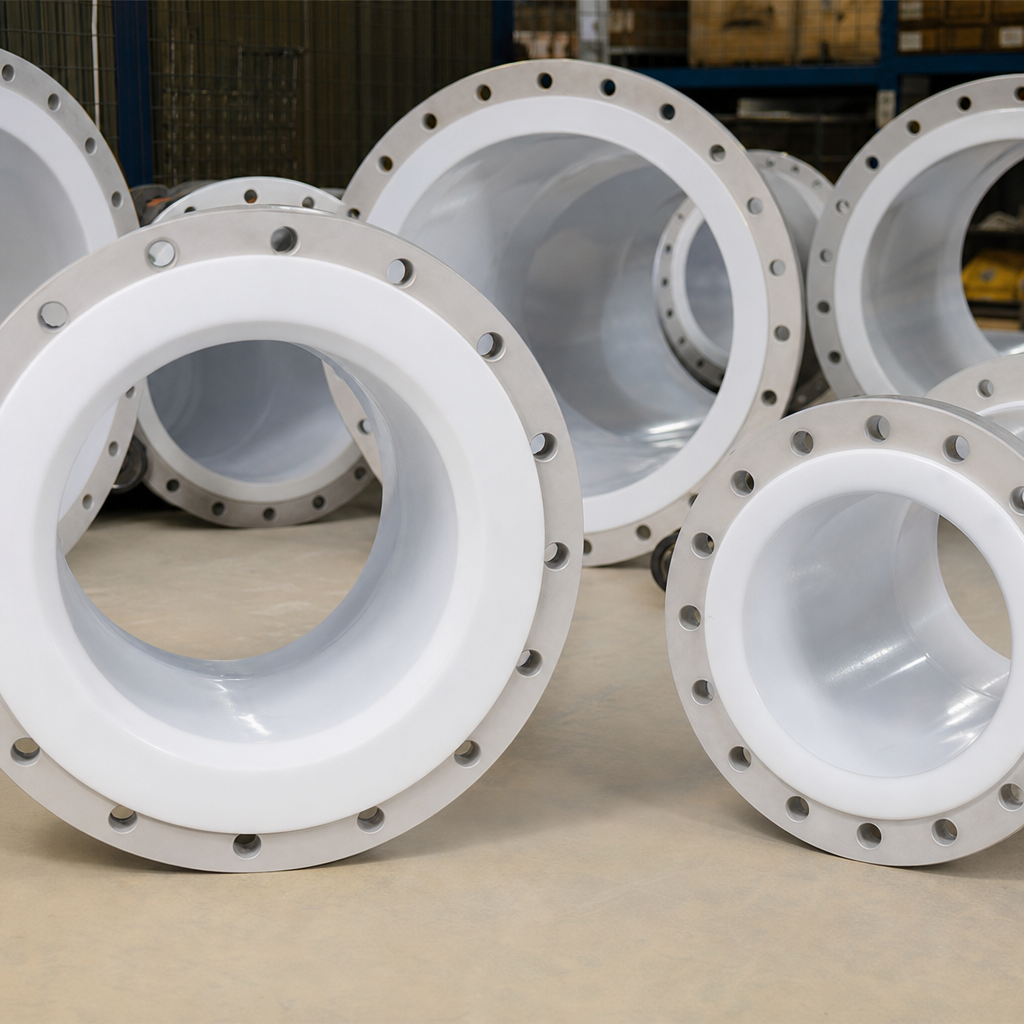
In practice that produces several established formats. A drum liner sits inside a standard steel or plastic drum and holds the product away from the drum wall. The reason drum liners are so widely used is straightforward: changing a liner between batches is considerably cheaper than cleaning or scrapping a drum. An IBC liner performs the same function at intermediate bulk container scale, typically 1,000 litres, where cleaning validation between products would otherwise represent a significant cost and time burden. A secondary containment bag surrounds a primary container and catches anything that escapes it, which matters most where the consequence of a leak reaching the outside world is severe, whether that means personnel exposure, environmental release or the loss of an expensive cargo. Holscot’s page on secondary containment bags for hazardous materials sets out how these are constructed. A vessel or tank liner protects fixed equipment rather than transport packaging, upgrading the corrosion resistance of a vessel never originally specified for the duty it now carries.
Split this way, the compatibility question narrows to a single material rather than an entire system. Once the liner is right, the remaining packaging can be selected on cost, availability and certification without the chemistry constraining every choice.
FEP, PFA and PTFE: Choosing the Right Fluoropolymer
Fluoropolymers earn their position here for one underlying reason. The carbon to fluorine bond is among the strongest in organic chemistry, and a polymer built around a fluorinated carbon backbone is chemically inert to an unusual degree. That is why FEP, PFA and PTFE resist almost every acid, alkali, solvent and oxidiser in industrial use, across a temperature range extending from cryogenic conditions to well above the boiling point of water. They also bring properties that matter for handling rather than chemistry. Nothing adheres to them, so residual product releases cleanly and drainage is close to complete. Nothing leaches out of them, so the product remains as pure as it went in. They are physiologically inert, which is why they appear so consistently in pharmaceutical and food contact duty.
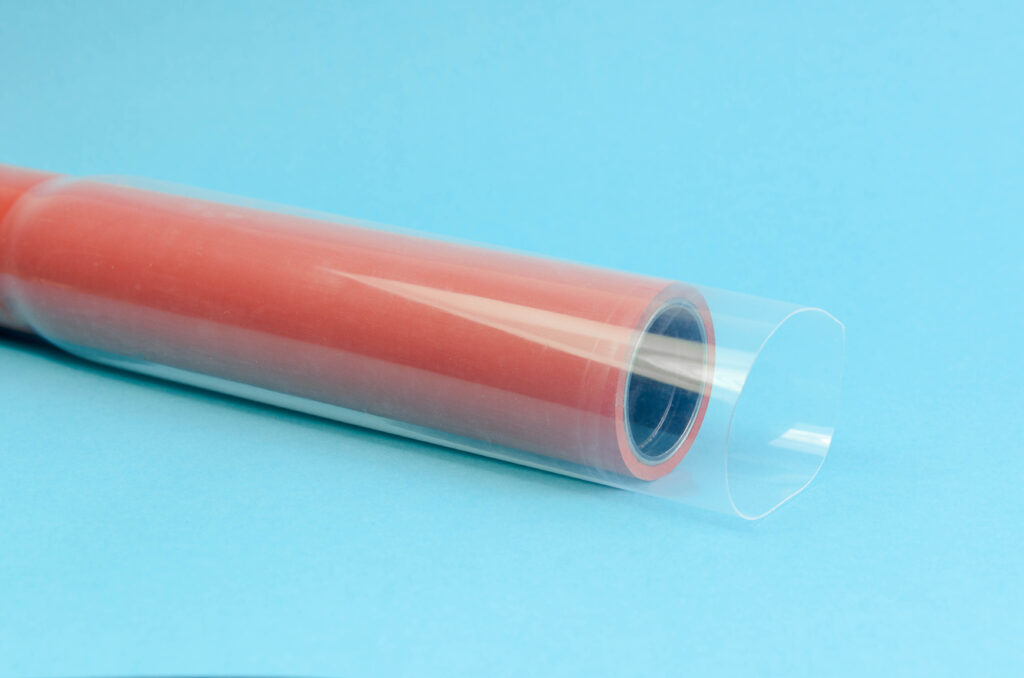
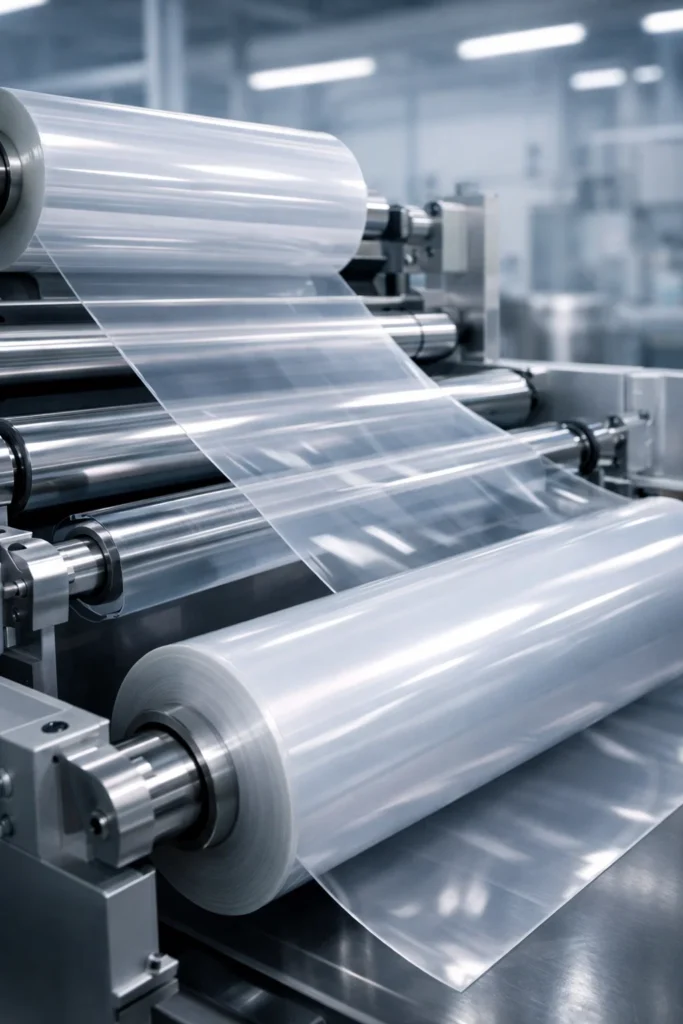
The three are not interchangeable, and the differences between them are practical rather than academic. FEP is the general purpose choice for flexible containment because it is melt processable, meaning it can be extruded into film, tube and complex shapes and then welded into finished assemblies. It is transparent, so both the product and the condition of the liner remain visible, and it is serviceable up to around 200 degrees Celsius continuous. For most bag, liner and bladder applications, FEP is the starting point. PFA handles higher temperatures, up to around 260 degrees Celsius continuous, and is favoured where ultra high purity is critical, with semiconductor grade chemical handling the classic case. It costs more than FEP and is specified where the duty genuinely calls for it. PTFE offers the broadest chemical and temperature range of the three but is not melt processable in the same way, so it is used for machined components, tapes, gaskets and lined pipework rather than for welded flexible bags.
The PTFE and FEP comparison comes up often enough to be worth stating plainly. Their chemical resistance is very similar, and the difference that matters in practice is manufacturing. Where a welded, flexible, formed or transparent part is needed, FEP is the material that will actually produce it. Where a machined solid or a very high temperature seal is needed, PTFE is the answer. Holscot’s fluoropolymer glossary explains each polymer in plain language, and the guide to choosing chemical resistant tubing for harsh environments works through the same comparison for transfer lines.
Purity, Single Use and the Cost of Cleaning
There is a commercial argument for liners that has nothing to do with hazard classification at all.
Cleaning a container between products is expensive, and for anything regulated the cleaning itself is the smaller part of the cost. The validation, the documentation, the sampling and the downtime while all of that takes place usually exceed it. For high purity chemicals the required standard may not be achievable at any price, because trace carryover at parts per billion is sufficient to reject a batch. A disposable liner removes the problem rather than managing it. The container is never contaminated because the product never contacts it, the liner is replaced, the container returns to service immediately, and there is no cleaning validation because there was no cleaning.
That is the model behind liner based packaging in the semiconductor industry, where ultra pure chemicals are delivered in a replaceable inner bag inside a reusable rigid outer, and it is spreading into pharmaceutical and speciality chemical handling for the same reasons. Fluoropolymer film is what makes the model work, because it is the only widely available film material that is simultaneously inert enough for aggressive chemistry and clean enough for high purity duty.
Why Bespoke Fabrication Matters More Than Catalogue Supply
Fluoropolymer liners are not a catalogue item in the way a polythene bag is, and attempting to buy them as one usually produces a compromise that satisfies nobody.
Every liner Holscot manufactures is engineered around the duty it will perform. Film gauge is selected for the specific combination of chemical, temperature and handling rather than taken from a standard range. Geometry follows the container it will sit inside, so that the liner fills and drains properly rather than trapping product in folds. Ports, fittings and connection points are welded in where the transfer system requires them, rather than adapted afterwards from something that nearly fits.
Welded construction carries more weight than it might appear. A welded fluoropolymer seam is a fusion of the same material, so the seam has the same chemical resistance as the film on either side of it. An adhesive bonded seam introduces a different material into the wetted surface, and that adhesive becomes the weakest point chemically even where it is the strongest point mechanically. In aggressive service, the adhesive is where failure starts.
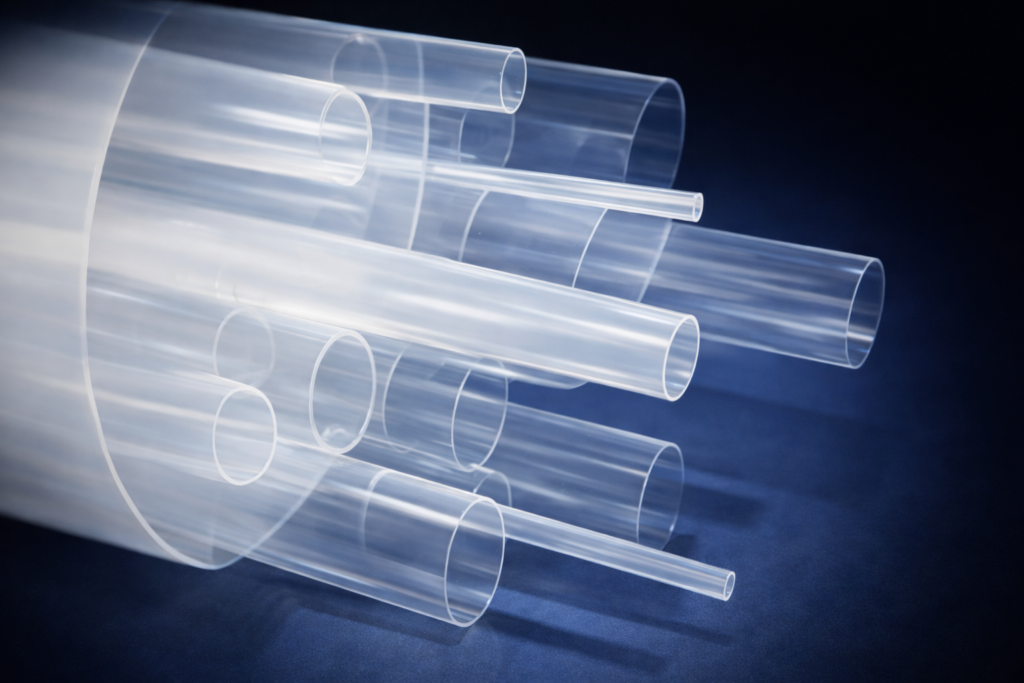
Holscot extrudes, welds and fabricates fluoropolymer in house, across eight extrusion lines in the UK producing tube from 3mm to 400mm in diameter. That matters for lead time and for traceability, because there is no converter in the chain and the resin behind any given part is known. The same capability supplies FEP hose liners for chemical transfer, so containment and transfer path can be specified as a single system rather than two separately sourced ones.
Specifying a Liner: What to Have Ready
Specifying a liner moves considerably faster when the duty has been defined. The information that makes the greatest difference is the chemical or chemicals involved, including concentration and any trace contaminants, the temperature range in service including transport and storage extremes, the volume and the container it will sit inside, whether the liner is single use or repeated duty, any purity or regulatory standard it has to meet, and any ports or fittings the transfer system requires.
Where some of that is uncertain, which is normal at the early stage of a project, it is worth discussing rather than assuming. A conversation about what the liner is genuinely going to encounter tends to be more productive than a specification built on defaults, and it is usually where the constraints that matter most come to light. Holscot’s technical team can be reached through the contact page.
Frequently Asked Questions
What is the difference between PTFE and FEP?
Both are fluoropolymers with very similar chemical resistance. PTFE has a higher continuous service temperature, around 260 degrees Celsius, but cannot be melt processed conventionally, so it is used for machined parts, tapes, gaskets and linings. FEP is melt processable, which means it can be extruded into film and tube and then welded into flexible bags, liners and bladders. FEP is also transparent and serviceable to around 200 degrees Celsius. For flexible containment, FEP is the practical choice.
What are chemical drum liners used for?
Chemical drum liners keep the product away from the drum wall, so the drum can be reused without cleaning and the product cannot be contaminated by the drum or by residue from a previous fill. They are used where the chemical would attack the drum, where product purity has to be protected, and where cleaning and revalidating a drum between batches would cost more than replacing a liner.
Does dangerous goods packaging need to be UN certified?
In most cases yes. Packaging used to transport dangerous goods generally has to be of a design type tested and certified against the UN performance standards, and marked accordingly. Certification addresses mechanical performance rather than chemical compatibility, so an approved packaging still has to be verified as compatible with the specific substance it will carry. An inner liner is normally specified as part of that system rather than as a substitute for approved outer packaging.
Are fluoropolymer liners chemically resistant to acids?
Yes. FEP, PFA and PTFE resist the great majority of acids, including strong mineral acids, across a wide temperature range, and they resist alkalis, solvents and most oxidisers as well. The list of substances that attack fluoropolymers under normal industrial conditions is very short. Resistance should still be confirmed against the actual chemical, concentration and temperature involved rather than assumed from the material family alone.