Why Large Diameter Heat Shrink Requires Specialist Attention
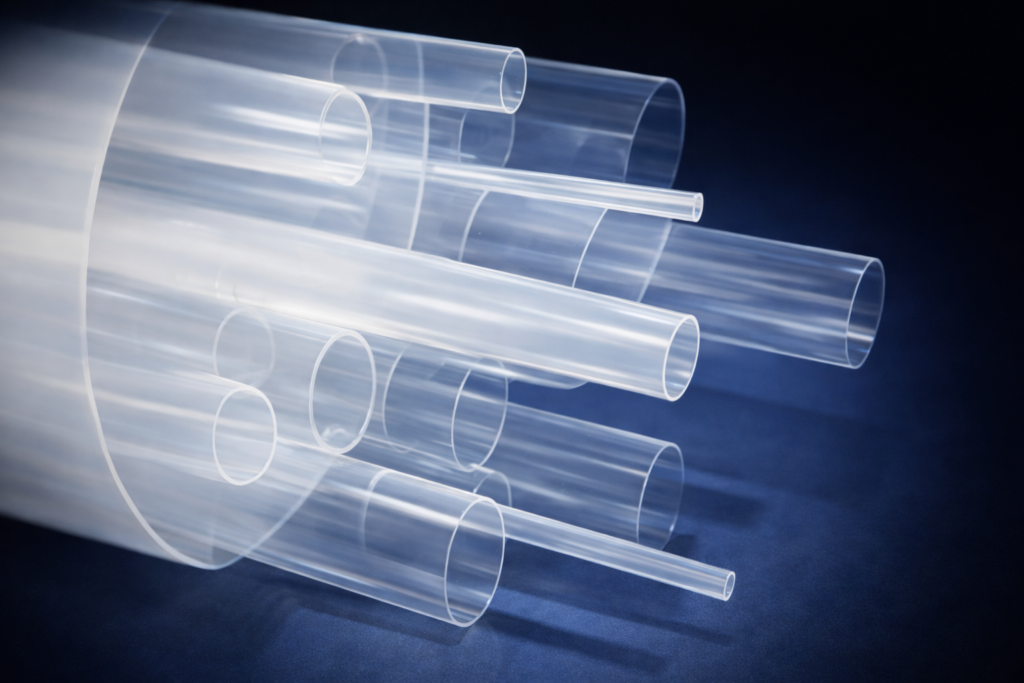
Large diameter heat shrink tubing is a specialist product, but in the industries that need it there is very little room for compromise. Standard heat shrink sizes are useful for cables, connectors and smaller assemblies, yet many industrial applications involve much larger dimensions. Pipe joints, cable bundles, industrial rollers, specialist housings and custom process components all create a need for heat shrink products well beyond the typical range.
This is where large diameter fluoropolymer heat shrink becomes highly valuable. When the application demands chemical resistance, non stick performance, temperature capability or a clean protective surface on a larger format component, ordinary shrink materials often fall short. FEP heat shrink, in particular, is attractive because it brings the benefits of fluoropolymer performance to oversized applications that still need a conforming, shrink fitted solution.
The first thing buyers should understand is that large bore heat shrink is not simply standard tubing made bigger. As diameters increase, handling, wall control, shrink behaviour and installation practicality all become more important. The product has to shrink consistently, fit the target component correctly and still deliver the required in service performance once installed.
Key Applications: Roller Covering, Pipe Protection and Cable Bundling
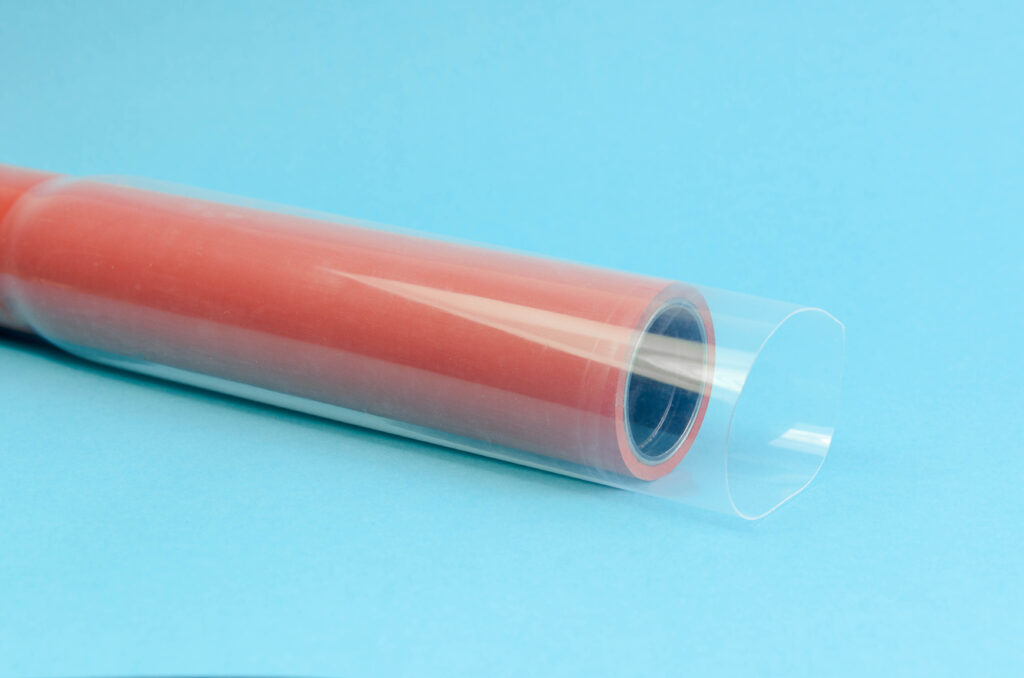
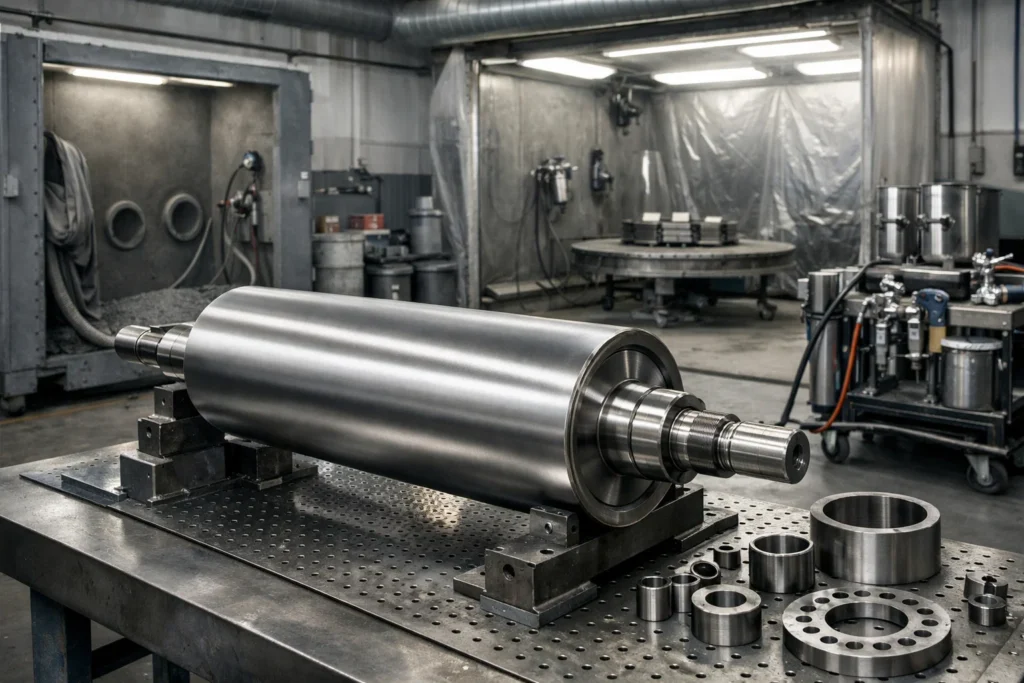
Applications are broader than many people realise. One major use is in industrial roller covering. Where a process needs a smooth, non stick, chemically resistant surface over a large cylindrical component, fluoropolymer heat shrink can provide an efficient route. Instead of building a completely new part from specialist material, the base roller can be covered with a shrink fitted fluoropolymer sleeve that changes the surface properties dramatically.
This is highly relevant in converting, laminating, printing and process manufacturing where build up, contamination and difficult cleaning can disrupt production. A large diameter FEP or related fluoropolymer cover can improve release and simplify maintenance while preserving the underlying roller structure. For more on Teflon roll covers, Holscot offers dedicated guidance.
Pipe joints and protective coverings are another important application area. Large diameter shrink products can be used where pipes, ducts or other industrial assemblies need a fitted protective layer that resists chemicals, contamination or environmental exposure. Because the tubing conforms as it shrinks, it can create a neat protective envelope around challenging geometries, provided the sizing is correct.
Cable bundling in specialist electrical or industrial systems may also require larger heat shrink dimensions, especially when multiple cables must be grouped and protected together. In these cases the tubing must do more than fit. It must also tolerate the thermal, chemical and mechanical environment around the assembly.
How to Size Large Diameter Heat Shrink Correctly
The sizing question is central. Choosing large diameter heat shrink should begin with two measurements: the largest dimension the tubing must fit over before recovery, and the final recovered dimension needed once installed. The shrink ratio then determines whether the selected tubing can bridge that gap effectively. Buyers should not simply choose a size that looks close. They need to account for installation clearance, recovery range and wall behaviour after shrink.
A practical sizing method starts by measuring the maximum outside diameter of the component or assembly before installation. Then identify the smallest diameter that the shrunk tubing must recover to while still fitting securely and delivering the intended surface function. If the tubing cannot recover tightly enough, the fit will be poor. If it cannot expand sufficiently before shrinking, installation may be impossible.
Wall thickness matters as well. Larger diameter tubing may be available in different thicknesses depending on the application. A thinner wall may suit some coverings where flexibility and close conformity matter. A heavier wall may provide more robust protection or a more durable surface in harsher service. This should be reviewed alongside the shrink ratio rather than as an afterthought.
Temperature of installation also needs attention. Fluoropolymer heat shrink products require controlled heating to recover properly. On large diameter components, uniform heat application becomes more challenging than on small cable assemblies. Installers need a method that allows even recovery without overheating the material or creating local distortion. This is particularly important on long rollers or wide industrial parts.
Specification Checklist for Buyers
From a specification perspective, buyers should ask a few practical questions. What is the maximum supplied diameter available? What recovered size can be achieved? What wall thickness options exist? What shrink ratio is offered? What is the service temperature once installed? How will the tubing be heated uniformly? Is the priority non stick performance, protection, insulation or chemical resistance? The answers shape the selection.
For many users, the appeal of large diameter fluoropolymer shrink is that it brings together surface performance and installation efficiency. Instead of replacing a large component or resorting to more complex fabrication, the tubing can be shrunk onto the existing part to create the desired working surface. Where dimensions are unusual or component replacement is costly, this can be a very practical route.
Understanding the types and benefits of heat shrink tubing more broadly can help buyers appreciate where large diameter products fit within the wider product family.
Why Holscot for Large Diameter Fluoropolymer Heat Shrink
Holscot is particularly well placed in this area because large diameter fluoropolymer products are not widely available from every supplier. With extrusion capability extending to very large diameters and strong experience in FEP and PFA heat shrink solutions, Holscot offers a level of range and technical support that is highly relevant for buyers working on non standard industrial applications. That matters because large bore heat shrink tends to be specified by people solving real engineering problems, not browsing commodity products.
There is also a customisation angle. Oversized industrial applications often need more than a nominal tube size. Length, tolerance, wall construction and end use can all vary. A supplier capable of discussing the practicalities of manufacture as well as the polymer itself adds real value here.
In use, the benefits are clear. Large diameter fluoropolymer heat shrink can provide chemical resistance, electrical insulation, easy clean surfaces and non stick performance over components that would otherwise be difficult to protect efficiently. It supports refurbishment, surface enhancement and specialist assembly in a format that is both technically capable and operationally useful.
For engineers and procurement teams, the key is not to underestimate the specification process. Large diameter heat shrink may look like a simple product category, but successful use depends on correct sizing, correct installation and correct fluoropolymer choice. When those elements align, it becomes one of the most effective ways to protect and enhance large industrial components.
If your application involves rollers, pipe joints, bundled assemblies or other oversized parts that need a high performance fitted surface, large diameter fluoropolymer heat shrink is well worth serious consideration. With the right dimensions and the right supplier support, it can solve problems that smaller format products and conventional coverings simply cannot address.
Contact Holscot to discuss large diameter heat shrink tubing for your industrial application.