
The Material Science Behind Electric Vehicle Batteries
The electric vehicle sector is often discussed through the lens of batteries, charging networks, range and manufacturing scale. What gets less attention is the material science behind the systems making all of that possible. Beneath the headlines about gigafactories and cell chemistry sits a quieter truth: high performance polymers play a significant role in modern EV design. Among them, fluoropolymers are especially important.
For companies working in advanced materials, this matters because the EV transition is not just about cars. It is about the wider supply chain of components, insulation systems, process equipment and chemical handling technologies that support battery production and vehicle performance. PVDF is one of the clearest examples. It has become closely associated with lithium ion battery manufacture, particularly as a cathode binder, but it is only part of the wider fluoropolymer story.
Why PVDF Is Critical in Lithium Ion Battery Manufacture
To understand why PVDF matters, it helps to start with the battery itself. Lithium ion cells are complex assemblies that rely on carefully engineered interactions between active materials, conductive additives, separators, electrolytes and current collectors. The cathode needs to hold together mechanically while allowing electrochemical performance to remain stable over repeated charge and discharge cycles. That is where PVDF enters the picture.
PVDF, or polyvinylidene fluoride, is widely used as a binder in cathode formulations because it offers a useful combination of chemical stability, adhesion and process compatibility. In practical terms, it helps bind the active cathode particles and conductive carbon to the aluminium current collector. That may sound like a supporting role, but it is fundamental to cell integrity. Without a binder that performs reliably, electrode manufacture and battery life become much harder to control.
The reason PVDF is favoured here is not fashion. Battery environments are chemically demanding, and materials inside the cell have to tolerate conditions that would quickly degrade less suitable polymers. PVDF brings resistance and stability that support performance over time, especially in the solvent based processes used in electrode manufacture. It has become part of the standard toolkit because it works.
Fluoropolymers Beyond the Battery Cell
Yet the EV story does not stop at PVDF binder use. Fluoropolymers appear in several parts of the battery and vehicle ecosystem because their broader property set aligns well with EV demands. Heat, chemistry, voltage, cleanliness and reliability are recurring themes, and fluoropolymers are often selected where those factors overlap.
Take high voltage wiring. As EV architectures become more sophisticated, electrical insulation performance becomes more important, not less. Materials used around cable systems need to tolerate temperature, resist chemicals and provide dependable dielectric behaviour over the service life of the vehicle. Fluoropolymers such as FEP can be valuable here because they combine electrical insulation with heat and chemical resistance in a lightweight format.
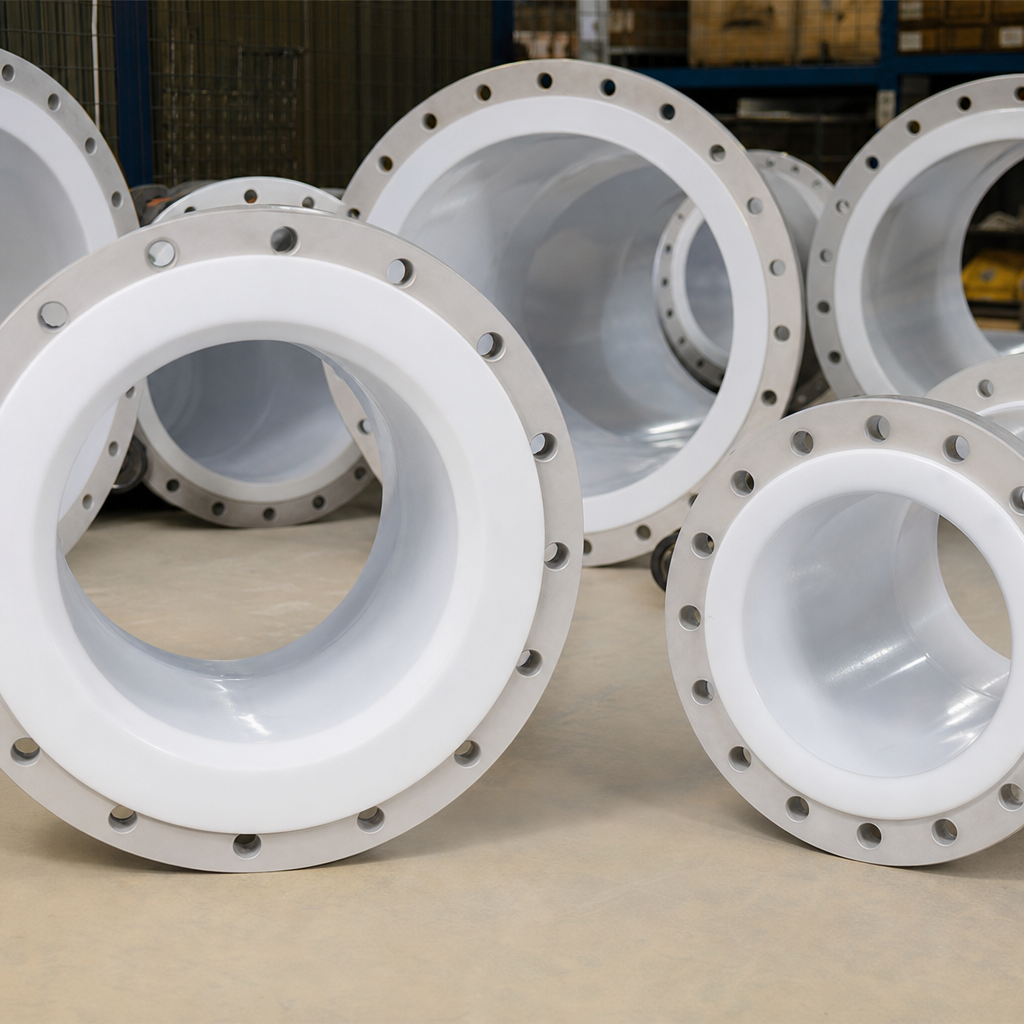
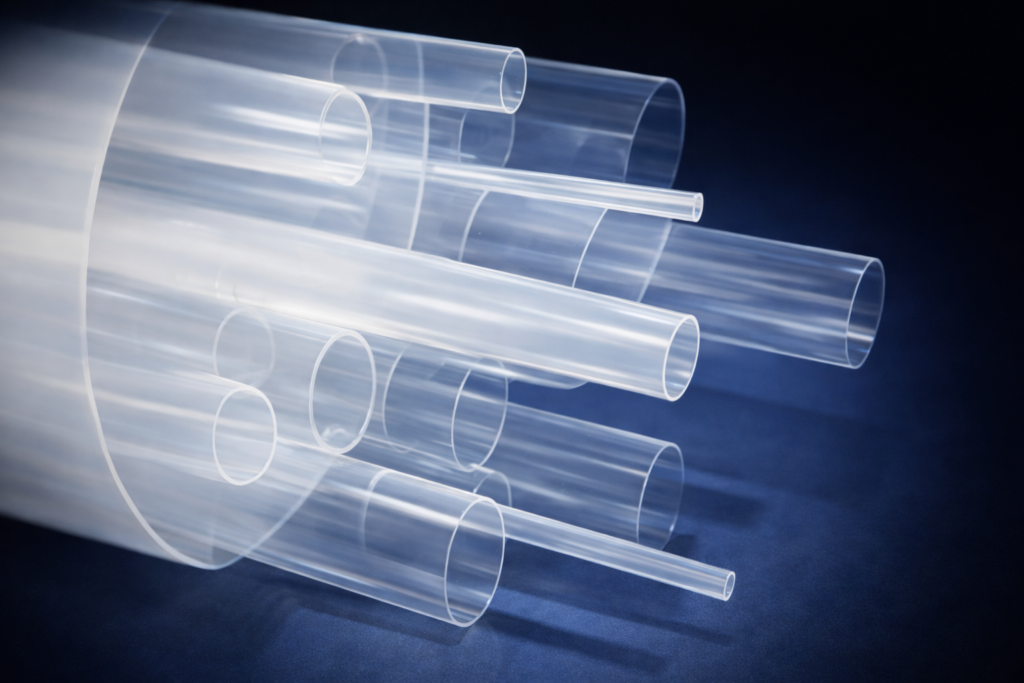
There is also a role for fluoropolymer materials in battery cooling and fluid handling systems. Battery packs generate heat, and thermal management is central to performance, safety and longevity. In surrounding manufacturing or support systems, materials such as PFA tubing may be specified for components handling aggressive chemicals or demanding thermal conditions. Again, the logic is familiar: where conventional materials struggle, fluoropolymers can bring a more stable solution.
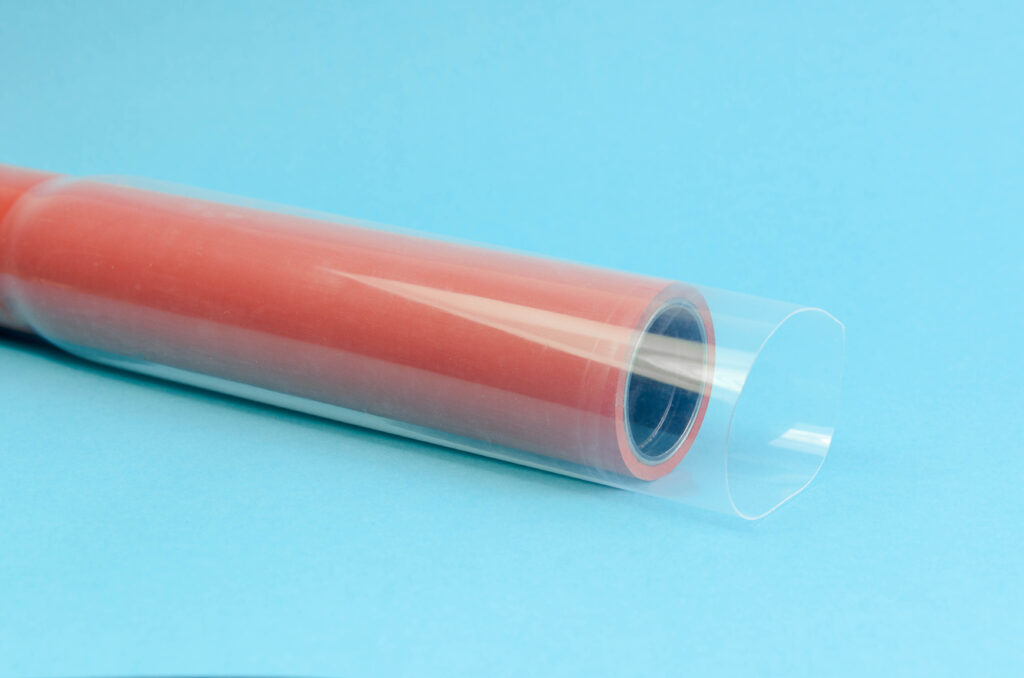
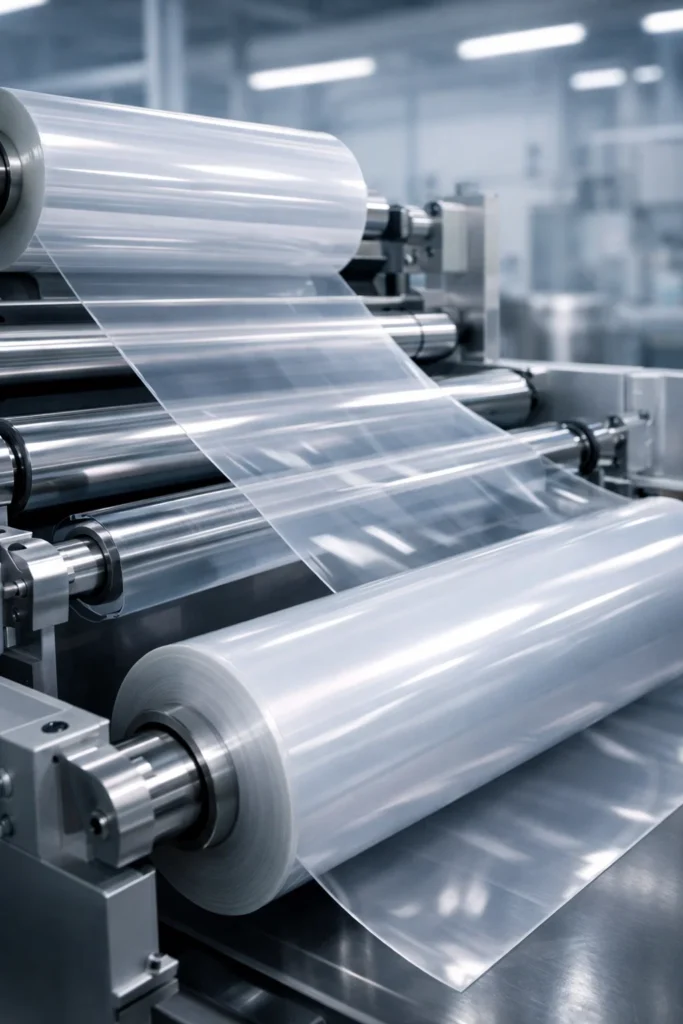
This broader picture matters for suppliers because the EV market is not only buying finished batteries. It is investing in the production infrastructure, process lines and specialist components required to make batteries at scale. That means opportunities extend beyond the cell itself. Tubing, heat shrink, extrusion, film, protective surfaces and chemically resistant fabrication all sit within the wider ecosystem.
Opportunities for UK Manufacturers and Technical Buyers
For UK manufacturers and technical buyers, the most interesting point is that fluoropolymers help enable both production and end use. In manufacturing, they support chemical handling, insulation and specialist process equipment. In the vehicle, they can contribute to cable protection, thermal systems and high reliability components. This makes fluoropolymers relevant to a range of organisations entering or expanding within EV supply chains, even if they are not making cells directly.
There is also a quality angle. EV supply chains demand repeatability. Materials are expected to perform consistently, documentation matters and component failure carries serious implications. Suppliers that understand fluoropolymers as engineered materials rather than generic plastics are therefore better positioned to support EV related applications. The requirement is not simply to supply polymer. It is to supply the right fluoropolymer form, with the right tolerances, processing knowledge and performance understanding.
That is where Holscot’s range becomes commercially relevant. Fluoropolymer extrusions, heat shrink products, films and specialist fabricated solutions sit naturally within sectors that value chemical resistance, electrical insulation, cleanliness and reliability. While not every Holscot product is aimed directly at battery cells, the company’s fluoropolymer expertise aligns well with the kinds of technical challenges that show up across EV and advanced manufacturing environments.
PFAS Regulation and the Future of Fluoropolymers in EV
Of course, the conversation around fluorinated materials is becoming more complex in the context of PFAS regulation. That means technical users will need to think carefully about justification, application criticality and responsible specification. In the EV sector, this is particularly important because many fluoropolymer uses exist precisely where reliability, safety and clean processing are essential. The answer is not to ignore the regulatory debate. It is to be more precise about where these materials add indispensable value.
As EV manufacturing scales, scrutiny around material supply, process reliability and long term durability will only increase. Battery performance targets are demanding, and manufacturing yields matter. That tends to favour materials with proven technical value rather than untested substitutes. PVDF has become prominent because it has earned that position in battery manufacture. Other fluoropolymers remain relevant because the same logic applies across adjacent systems.
From a material science perspective, the case is clear. EV systems place heavy demands on chemical resistance, thermal stability, electrical performance and process cleanliness. Fluoropolymers continue to show up in those environments because they solve difficult problems. PVDF in battery electrodes is one example, but not the only one. FEP, PFA and related materials support the wider infrastructure that allows advanced electrification to function reliably.
For businesses serving this market, the opportunity lies in understanding where fluoropolymers sit in the chain and what problems they are solving. The more clearly that application level value is understood, the stronger the commercial and technical case becomes. The EV revolution may be powered by electricity, but it is enabled by materials that can tolerate the demands of modern battery systems. Fluoropolymers are firmly part of that story.
To explore how Holscot’s fluoropolymer products can support EV and advanced manufacturing applications, get in touch with our technical team.