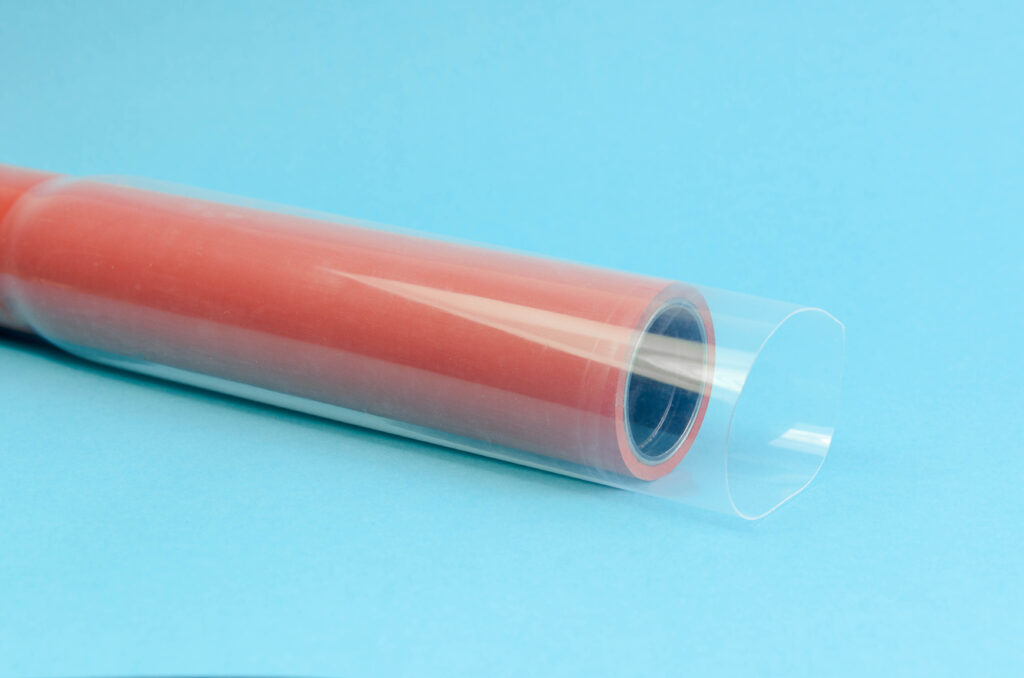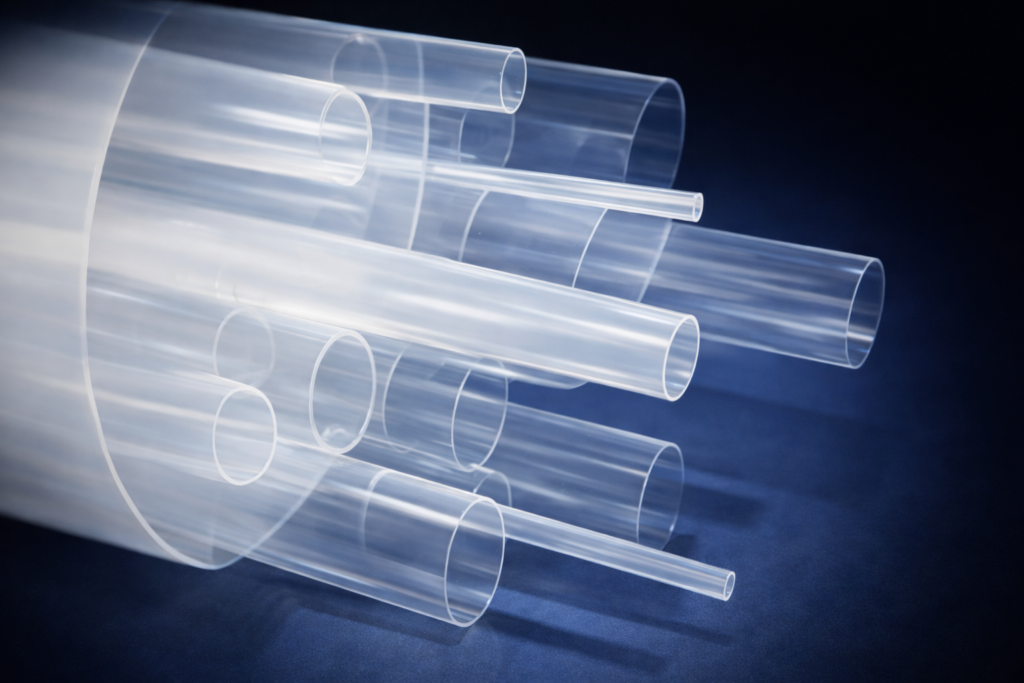

FEP heat-shrink sleeving has become one of the most reliable ways to protect, insulate and seal components across many UK industries. It offers exceptional clarity, chemical resistance and a precise shrink ratio that creates a clean, uniform fit around wires, rollers, tubes and sensitive equipment. Although many materials can be used for protective sleeving, FEP stands out because it performs consistently in environments that challenge other plastics.
This guide explains the key advantages of FEP heat shrink, how tolerances work, and where it is used most often in the UK. It also includes a link to Holscot’s dedicated product range so you can explore specifications and sizing in more detail.
You can view the full product range here.
What Makes FEP Heat-Shrink Sleeving Different?
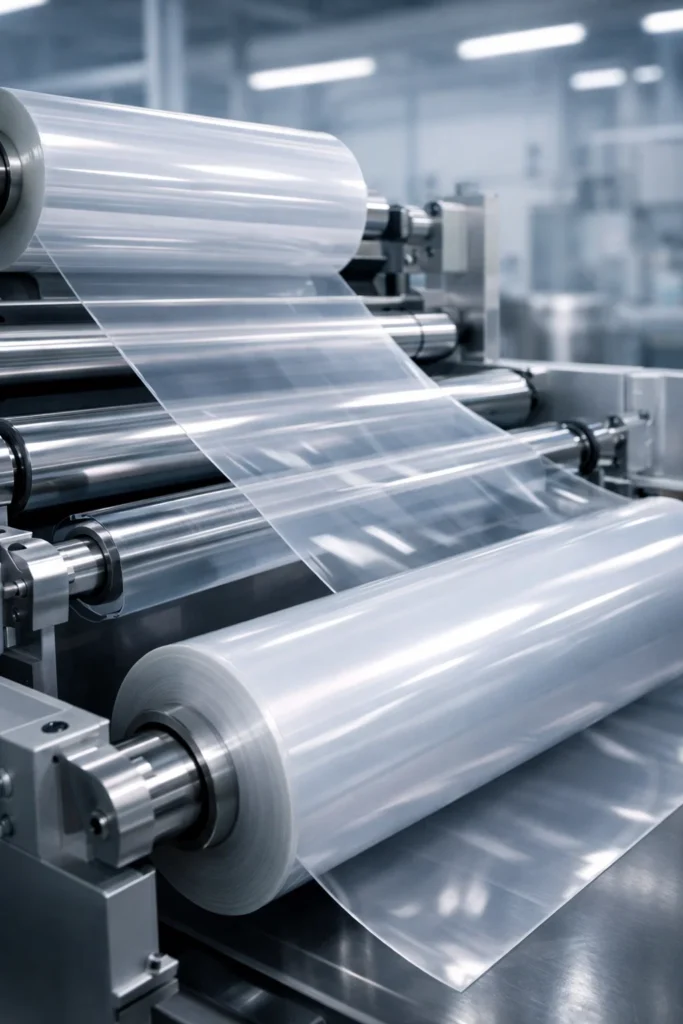
FEP, or fluorinated ethylene propylene, is part of the fluoropolymer family. Like PTFE, it offers outstanding resistance to chemicals and heat, but it has one major advantage. FEP is melt-processable, which allows manufacturers to create thin, smooth and transparent sleeving that shrinks uniformly when heated.
This makes FEP heat-shrink ideal for applications that require clarity, tight tolerances and long-term reliability.
Clarity and Visual Inspection
FEP is one of the clearest plastics available. When used as heat-shrink sleeving, it allows full visibility of the component beneath. This is essential for:
- Electrical inspections
- Sensor protection
- Laboratory tubing
- Medical device assembly
Clear sleeving allows users to check for wear, leaks, contamination or damage without removing the protective layer.
Superior Chemical Resistance
FEP withstands almost every solvent, acid and chemical used in industrial, laboratory and processing environments. It does not degrade, swell or crack when exposed to harsh materials. This performance is one of the main reasons it is chosen for chemical lines, analytics equipment and pharmaceutical production.
High Heat Performance
FEP heat-shrink sleeving performs reliably at continuous temperatures up to 200°C. It does not soften, deform or lose clarity under heat. This allows it to be used near heaters, UV sources and industrial machinery where other plastics would break down.
Understanding Shrink Ratios and Tolerances
A key advantage of FEP heat-shrink sleeving is its predictable shrink behaviour. Manufacturers produce the sleeving in expanded form. When heat is applied, the material returns to its original extruded size. This produces a precise, uniform fit around the component.
Common Shrink Ratios
Most FEP heat-shrink sleeving is supplied in a 1.3:1 shrink ratio. This is enough to achieve a firm, clean grip without wrinkling or distorting the component below.
Some specialised versions offer higher ratios, although these are less common because FEP is designed for precision rather than aggressive shrink.
Tight Dimensional Tolerances
Dimensional accuracy is one of the biggest strengths of FEP heat-shrink sleeving. It is manufactured with tight tolerances that allow it to fit delicate or high-value components without excessive movement.
This level of control ensures:
- Reliable insulation
- Neat finishing
- Consistent performance across batches
- Protection without added bulk
Smooth Inner Surface
Another benefit is the extremely low friction surface inside the sleeving. The smooth bore reduces the risk of abrasion or scoring on sensitive components.
Key Advantages of FEP Heat-Shrink Sleeving
1. Non-stick Surface
FEP has one of the lowest coefficients of friction of any polymer. This prevents dirt, adhesives, or process materials from sticking to the surface. It also reduces wear on rollers, pins and shafts.
2. Biocompatibility and Purity
FEP does not leach contaminants, which is important in:
- Pharmaceutical processing
- Laboratory equipment
- Food production
- Medical devices
It is an inert, non-reactive option for environments where purity is essential.
3. Electrical Insulation
The dielectric properties of FEP make it ideal for insulating:
- Wires
- Probes
- Sensors
- High-voltage connections
It maintains electrical stability even in damp or chemically active settings.
4. UV and Weather Resistance
FEP does not become brittle, discoloured or cracked under UV. It works well outdoors and in environments with constant light exposure.
5. Dimensional Stability
Even after shrinking, FEP maintains shape and clarity. It does not loosen or slump during long-term use.
Where FEP Heat-Shrink Sleeving Is Used in the UK
Industries across the UK rely on FEP sleeving for precision, cleanliness and durability.
Electronics and Instrumentation
FEP is widely used for insulating micro-wires, thermocouples, probes and connectors. Its clarity helps engineers inspect connections without removing the sleeve.
Medical and Pharmaceutical
The material’s purity, smooth surface and chemical resistance make it the preferred choice for tubing, catheters, analytical equipment and lab instruments.
Printing and Packaging
Rollers and guide pins are often protected with heat-shrink FEP to prevent adhesive build-up and reduce friction.
Aerospace and Defence
FEP heat-shrink sleeving offers reliable protection in environments that demand low weight, stability and long service life.
Chemical and Industrial Processing
It protects components from corrosive materials and high temperatures. It also extends the lifespan of valves, feed lines and sensor housings.
Food and Beverage Production
Its non-stick surface prevents contamination and allows for easy cleaning. It is often used on process rollers, cutting equipment and transfer lines.
Why FEP Heat-Shrink Sleeving Is Often Preferred Over PTFE and PFA
Although PTFE, PFA and FEP share similar chemical properties, their behaviour during processing is different.
- PTFE cannot be melt processed, so it is not typically used for heat-shrink sleeving.
- PFA offers high temperature performance but is less clear and more expensive.
- FEP delivers the ideal balance of clarity, processability, stability and cost.
For most UK applications that need visibility, precision and chemical resistance, FEP is the most practical option.
Final Thoughts
FEP heat-shrink sleeving combines clarity, chemical resistance, clean shrink behaviour and tight tolerances. This makes it ideal for demanding UK industries that need reliable protection without adding bulk or obscuring the component beneath. Whether you work in manufacturing, pharmaceuticals, food production or electronics, FEP heat-shrink offers dependable and long-lasting performance.
If you want to review sizes, tolerances or bespoke options, you can explore Holscot’s full product range here.