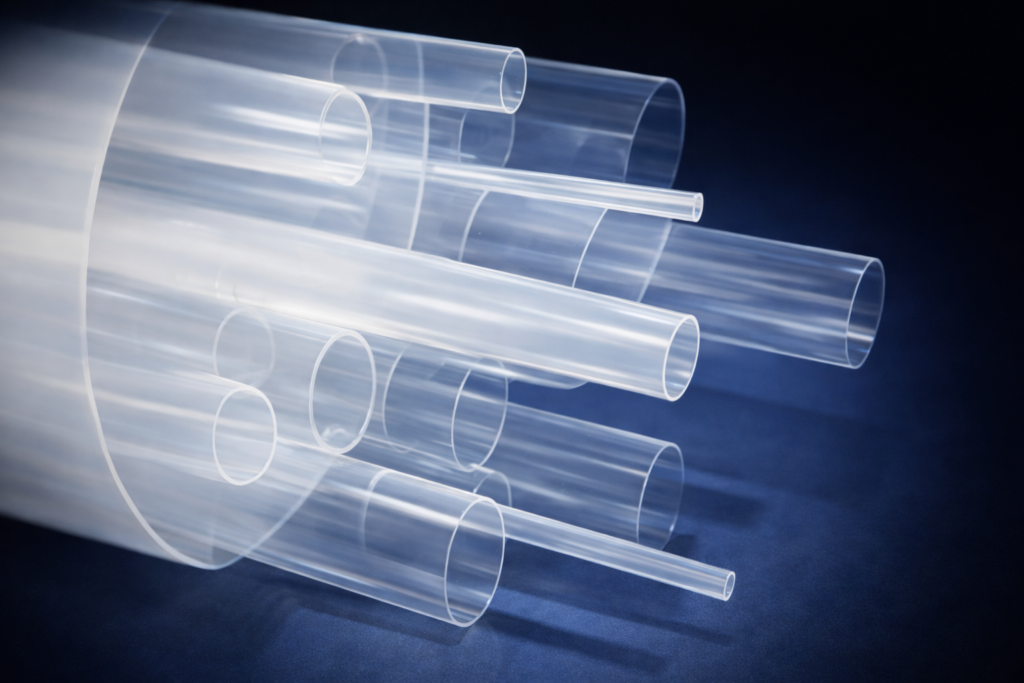

FEP tubing is one of the most reliable choices when a process needs clarity, strength and long-term chemical resistance. It is used across laboratories, chemical plants, food production, water treatment and high-purity environments because it performs consistently in demanding conditions. Although it often sits in the shadow of PTFE, FEP brings its own advantages and is widely preferred in applications where visibility, cleanliness and stability matter.
This guide explains the key temperature limits, chemical resistance characteristics and real-world uses of FEP tubing in UK industry. It has been written in a clear and accessible way for engineers, buyers and technical teams who want a practical overview before specifying the material.
What Is FEP Tubing and Why Is It Popular?
FEP stands for Fluorinated Ethylene Propylene. It belongs to the fluoropolymer family, which also includes PTFE, PFA and ETFE. All fluoropolymers are valued for their non-stick properties, temperature performance and resistance to a broad range of chemicals.
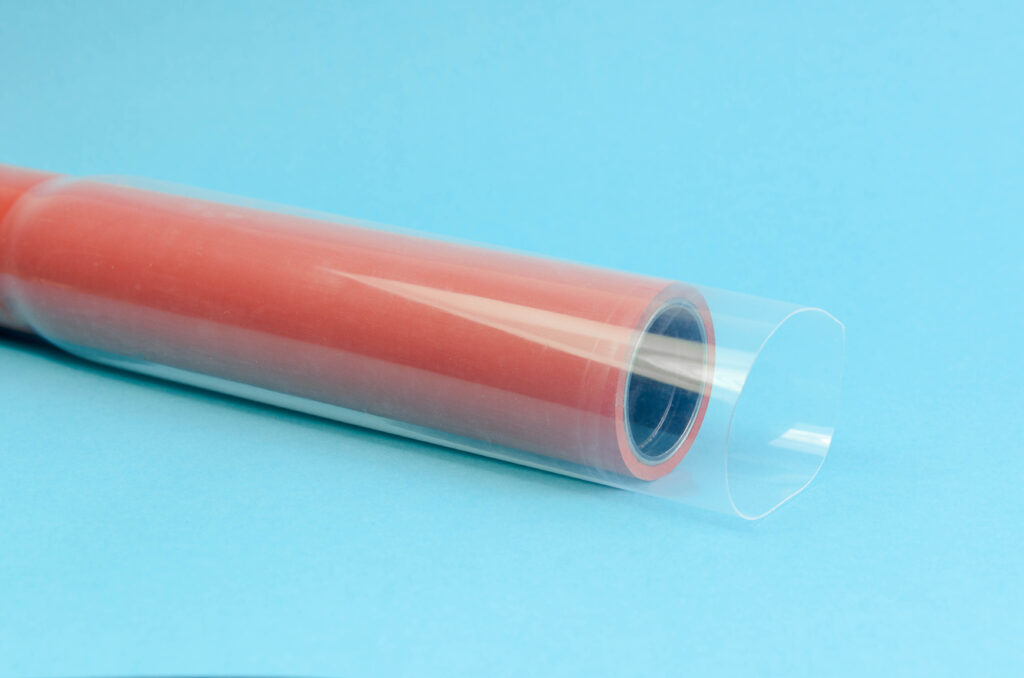
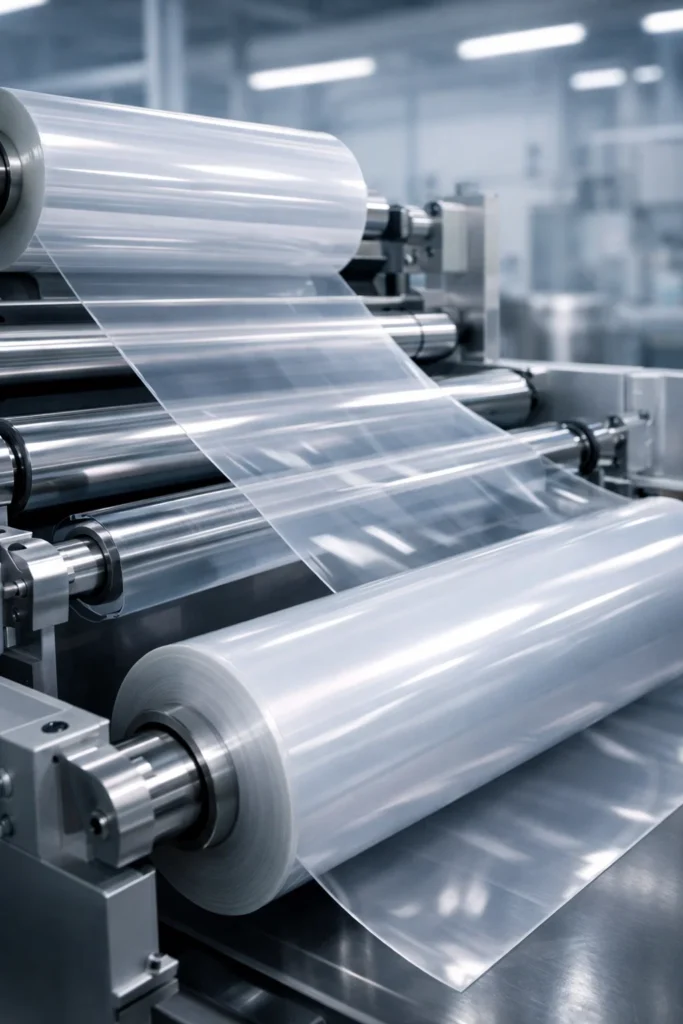
FEP tubing is produced through melt processing, which allows it to be extruded into consistent shapes with excellent clarity. This is one of the main reasons engineers select it. The transparency helps with visual inspection, flow monitoring and contamination checks, especially in high-purity or sanitary environments.
In the UK, it is commonly used in fluid transfer, sampling lines, cable insulation, laboratory equipment and chemical handling systems because it delivers consistent performance with little maintenance.
If you need a deeper look at available sizes, tolerances and options, you can browse Holscot’s range of FEP tubing through our dedicated product page, available here: FEP tubing.
Temperature Performance of FEP Tubing
One of the strengths of FEP tubing is its stable temperature range. It can tolerate both hot and cold environments without losing shape or flexibility.
Typical temperature limits
• Continuous service temperature: approximately 204°C
• Lower operating limit: around minus 80°C
• Short-term peak resistance: slightly above 204°C depending on wall thickness and system design
These ranges make it suitable for processes that involve heating cycles, sterilisation or exposure to freezing conditions. Unlike some plastics, FEP does not become brittle in the cold, which helps maintain safety and consistency in outdoor and refrigerated environments.
How FEP compares to other fluoropolymers
• PTFE has the highest temperature resistance but cannot be melt processed.
• PFA offers excellent high-temperature performance and is often used in semiconductor applications.
• FEP sits in the middle, offering good thermal stability with superior clarity and easier processing.
For many UK-based engineering projects, FEP is the best all-round option because it provides a stable working range without the cost of higher-grade fluoropolymers.
Chemical Resistance: One of FEP’s Strongest Advantages
Chemical resistance is the reason many teams choose FEP tubing in the first place. It stands up well against aggressive acids, solvents and cleaning agents that would damage other plastics.
Typical substances FEP can resist
• Hydrocarbons
• Acids, including strong mineral acids
• Alkalis
• Alcohols
• Ketones
• Chlorinated solvents
• Many corrosive chemicals used in industrial washing and processing
This makes it ideal for chemical feed lines, sampling systems and any process that involves harsh or reactive compounds.
When is chemical resistance especially important?
• Predictable performance in long-term chemical exposure
• Reducing the risk of contamination
• Avoiding cracking, swelling or softening of tubing
• Supporting safety and compliance in regulated industries
FEP also has a low surface energy, which helps reduce build-up and makes cleaning easier. This is particularly useful in laboratory environments or applications where cleanliness must be maintained day after day.
Industrial Applications of FEP Tubing in the UK
Across the UK, FEP tubing has become a standard choice for many organisations that prioritise reliability. Here are some of the industries and applications where it performs especially well.
1. Chemical Processing and Transport
FEP is frequently used in chemical feed lines, dosing systems and transfer pipelines. The tubing maintains clarity even with long-term exposure to chemicals, allowing teams to spot flow issues before they become problems.
2. Water Treatment and Filtration
Because FEP resists corrosion and does not leach additives, it is well suited to potable water systems and filtration equipment. Its clarity supports easy inspection, which reduces downtime.
3. Food and Beverage Production
FEP is often selected because it is non-stick and easy to clean. It withstands standard sanitising agents and temperature changes without degrading. This makes it suitable for liquid transfer and sampling lines in hygienic environments.
4. Pharmaceutical and Laboratory Use
In laboratories and cleanrooms, FEP is preferred for its purity and inert nature. It is used for sample handling, analytical instruments, gas lines and corrosive solutions because it does not contaminate the media inside.
5. Electrical and Cable Insulation
The dielectric properties of FEP make it a strong choice for wire and cable jacketing. It performs reliably in high-temperature environments and offers a high degree of chemical stability.
6. Heat-Shrink Applications
FEP heat-shrink tubing is used to protect components, insulate wiring and enhance mechanical strength. It provides a thin, clear layer that resists chemicals and supports long-term durability.
7. Marine and Outdoor Environments
FEP is highly resistant to UV radiation and weathering. It performs well in saltwater environments and is often used for sensors, equipment housings and exposed tubing runs.
Why UK Manufacturers Choose Holscot for FEP Tubing
Holscot has more than six decades of experience producing high-quality fluoropolymer products. All FEP tubing is made through carefully controlled extrusion processes, allowing for consistent clarity, accurate dimensions and reliable long-term performance.
Customers trust Holscot because we focus on:
• Material purity and consistency
• Careful control of extrusion parameters
• Reliable availability across a wide range of sizes
• Technical guidance from teams who understand fluoropolymers in detail
Because we extrude FEP in house, we can offer bespoke sizes, unusual wall thicknesses and specialist solutions for projects that fall outside standard ranges.
Thinking About Specifying FEP Tubing?
If you are exploring options for FEP tubing or would like advice on choosing the right fluoropolymer for your application, Holscot can help. Our team supports engineers and procurement specialists across chemical processing, laboratory environments, water treatment, manufacturing and more.
You can browse our full range of tubing and request further guidance through our product page. Visit Holscot’s FEP tubing section to learn more and speak to our technical team.