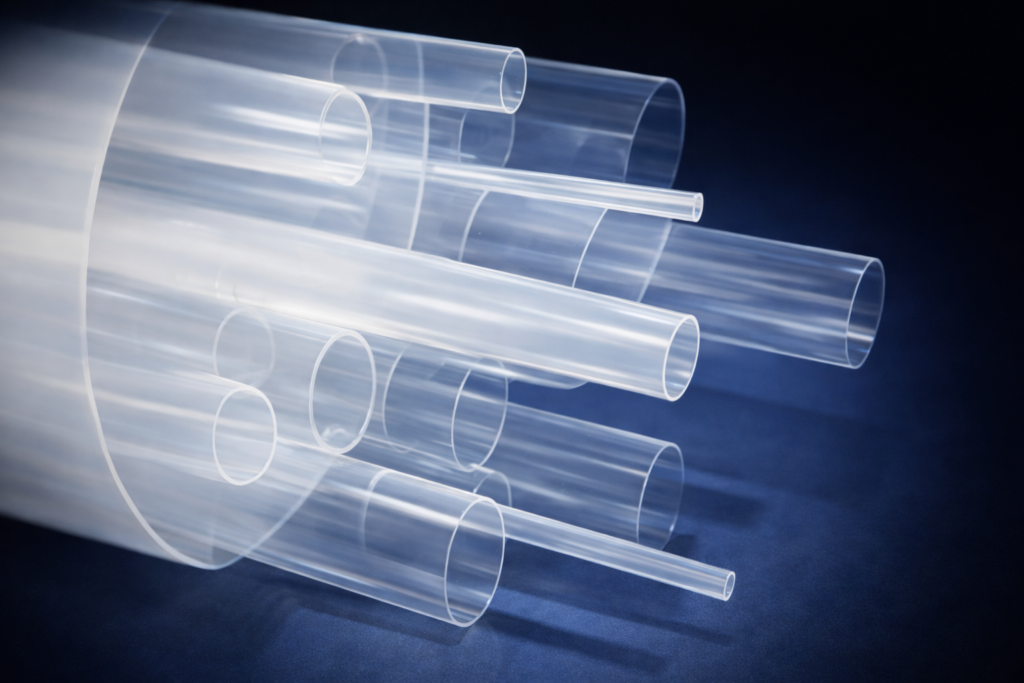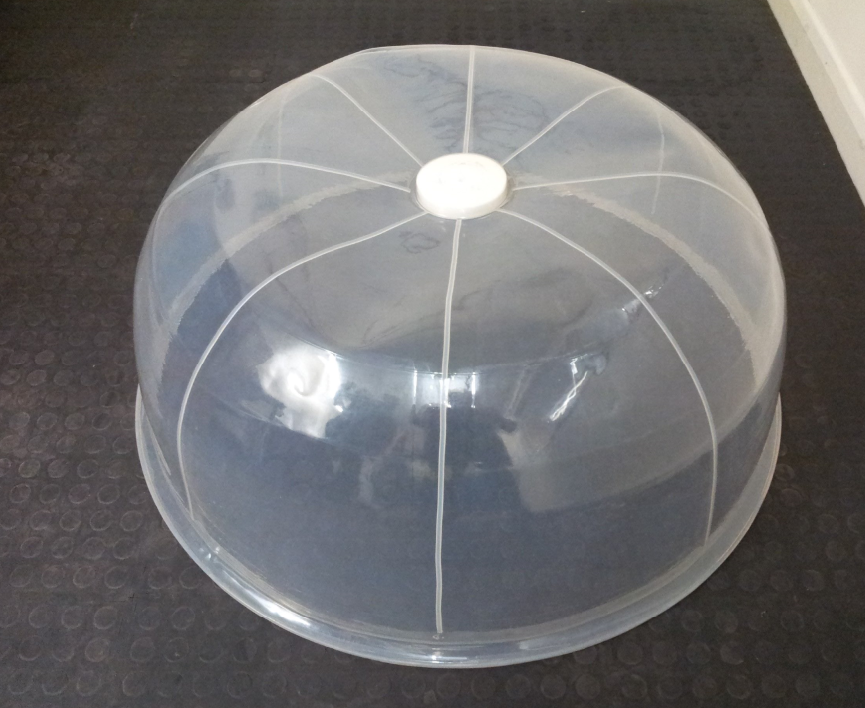

From satellites in orbit to UAVs on patrol, modern aerospace and defence programmes are under relentless pressure to save weight, extend service life and withstand extreme environments. Metals still do the heavy lifting in primary structures – but for components and protections that demand radiation resistance, chemical compatibility, thermal stability and low mass, high-performance fluoropolymers are increasingly the smarter choice.
At Holscot, we’ve specialised in engineering-grade fluoropolymers for over half a century. This article explains where materials like FEP, PFA and ETFE fit into today’s aerospace materials stack-and how we help OEMs and Tier suppliers specify, fabricate and deploy them with confidence.
Why fluoropolymers belong in aerospace & defence
Fluoropolymers deliver a rare combination of properties that directly address mission and certification requirements:
- Lightweight – Excellent strength-to-weight characteristics for covers, liners, tubing and protective skins, helping reduce fuel burn or extend range/endurance.
- Radiation resistance – Stability under UV and ionising radiation makes them suitable for high-altitude, space-adjacent and avionics-adjacent uses.
- Chemical compatibility – Inert to fuels, hydraulic fluids, de-icers and corrosive media encountered on the apron, in flight or during MRO.
- Thermal stability – Service over wide temperature ranges with low brittleness at cold-soak and reliable performance near hot zones.
- Flame retardance and low smoke – Inherent fire performance characteristics support cabin, bay and nacelle applications.
- Electrical and dielectric performance – Consistent dielectric properties for insulation, harness protection and sensor housings.
- Low outgassing and cleanliness – Critical for avionics, optics and sensitive payloads.
- Optical clarity (FEP/PFA) – Where visibility, inspection or sensor transparency matters.
These attributes make fluoropolymers a compelling alternative or complement to traditional aerospace materials in secondary structures, protective systems and fluid management.
Where Holscot materials are used
We work with aerospace and defence stakeholders across the supply chain to design and fabricate parts that meet programme targets for weight, durability and reliability. Typical applications include:
- Engine bay protection – FEP fan case covers and protective skins that shield against chemical attack and corrosion while keeping mass to a minimum. See our overview of aerospace parts made from fluoropolymers, including FEP engine fan case covers.
- Fluid and chemical handling – FEP/PFA/ETFE tubing, liners and manifolds compatible with fuels, Skydrol-type hydraulic fluids and de-icing solutions.
- Avionics & harness protection – Thin-wall, low-outgassing sleeves and films with stable dielectric properties over temperature.
- Sensor windows & covers – Optically clear FEP/PFA elements where visibility or IR/UV transmission is needed alongside chemical and weather resistance.
- Ground support & MRO – Chemically resistant liners and protective covers for maintenance rigs, test cells and wash bays.
Each programme is different. Our job is to align material grade, thickness, process route and finish to the environment and certification standards you’re working to.
FEP, PFA or ETFE? Choosing the right aerospace material
Holscot processes a portfolio of fluoropolymers to give you the best-fit option rather than a one-size-fits-all compromise.
FEP (Fluorinated Ethylene Propylene)
- Best for: Optical clarity, chemical inertness, smooth non-stick surfaces, reliable radiation and UV stability.
- Typical uses: Transparent protective skins, engine fan case covers, sensor windows, fluid lines and easy-clean liners.
- Why aerospace teams choose it: The balance of clarity, chemical resistance and low mass is difficult to beat when you need protective performance without visual or dielectric penalty.
PFA (Perfluoroalkoxy Alkane)
- Best for: Higher temperature margins with similar chemical resistance to FEP.
- Typical uses: Harsher thermal environments, hot-side fluid conduits, and components that see repeated thermal cycling.
ETFE (Ethylene Tetrafluoroethylene)
- Best for: Toughness and abrasion resistance with a lighter, more robust film or sheet.
- Typical uses: Impact-resistant covers, cable jacketing, and areas where mechanical durability meets weight sensitivity.
We help you shortlist the right polymer and tune wall thickness to achieve your mechanical target while preserving weight, flexibility and installability.
Radiation resistance and high-altitude reliability
High-altitude and low-Earth-orbit environments expose materials to UV and ionising radiation levels that quickly age commodity plastics. Fluoropolymers such as FEP are renowned for radiation stability, maintaining mechanical and optical properties longer so that protective components remain serviceable and predictable between inspection intervals. That translates to fewer unplanned removals and a more stable maintenance schedule.
Chemical compatibility for the real world
From hangar to runway to flight line, aerospace components are routinely exposed to jet fuel, hydraulic fluids, lubricants, cleaning agents and de-icing chemicals. Holscot’s fluoropolymers are chemically inert, so parts retain dimensional stability and surface finish—avoiding swelling, softening or stress-cracking that can plague alternative plastics and coatings. This is especially valuable for corrosion prevention, where a high-integrity barrier is vital to protect metallic substrates and assemblies.
Lightweighting that pays off
Every gram matters. Replacing metal shrouds, heavy elastomers or thick composite layups with thin-wall FEP/PFA/ETFE films and skins can deliver meaningful mass reductions without sacrificing performance. On multi-ship sets, these savings compound—improving payload margins, extending endurance for UAVs, and helping manned aircraft hit fuel-burn and emissions targets.
Because we control extrusion, heat-forming and fabrication in-house, we can achieve tight thickness tolerances and repeatable finishes that stand up to aerospace scrutiny.
Engine fan case covers: a corrosion-resistant, clear example
Moisture, salt and chemical ingress are persistent threats in and around the nacelle. FEP fan case covers provide a lightweight, inert barrier that helps prevent corrosion of sensitive metallic structures while allowing visual inspection thanks to FEP’s optical clarity. They install cleanly, resist common aviation chemicals and maintain surface integrity over time—reducing unplanned maintenance.
Learn more here: Aerospace parts made from fluoropolymers: FEP engine fan case covers.
Designed for extreme temperatures
Cold-soak conditions and thermal gradients can punish plastics. Fluoropolymers retain toughness at low temperatures and deliver stable performance near engine-adjacent heat sources (within the polymer’s rating). The result is consistent dimensional stability and fastener integrity, flight after flight.
Fabrication & quality: how Holscot delivers aerospace-ready parts
- Material validation – Certificates and traceability from resin to finished part to support your quality and airworthiness documentation.
- Precision forming – Heat forming, vacuum forming and heat-shrink processing to deliver consistent geometry with tight tolerances.
- Joining & finishing – Specialist welding, bonding and edge finishing for clean interfaces and snag-free installation.
- Prototyping to series – Rapid development support to de-risk your design, then smooth scaling to production with repeatable lead times.
- Collaborative engineering – Our application engineers work directly with your design, stress and materials teams to hit weight, thermal and chemical targets—and to simplify installation and MRO procedures.
When to specify Holscot aerospace materials
Consider a switch to FEP, PFA or ETFE when you need:
- A lighter replacement for metal or bulky elastomers.
- Radiation-stable protection near sensors, optics or high-altitude equipment.
- Chemically inert barriers against fuels, hydraulic fluids, lubricants and de-icers.
- Flame-retardant, low-smoke solutions for bays and interior compartments.
- Optically clear windows or skins that also resist corrosion and fouling.
- Low-outgassing materials around avionics and payloads.
If you’re balancing weight, durability and certification constraints, we’ll help you select the right polymer, thickness and process—and back it with the documentation your programme requires.
Talk to Holscot
Holscot supplies aerospace and defence programmes with lightweight fluoropolymer solutions that perform in the toughest environments. Whether you’re protecting engine structures from corrosion, routing aggressive fluids, or safeguarding avionics with clean, inert covers, our team can help you design, prototype and deliver with confidence.
Explore a relevant use case here: FEP engine fan case covers for corrosion prevention.
To discuss your application, speak to a Holscot engineer.