In the world of advanced materials, terms like “fluoroplastics” and “fluoropolymers” are often used interchangeably. But what exactly sets these two apart, and how do they relate to the unique solutions we provide here at Holscot? Let’s dive into the distinctions and explore the special characteristics, applications, and properties of these remarkable materials.
Fluoroplastics and Fluoropolymers: What’s the Difference?
At Holscot, we pride ourselves on our deep understanding of fluoroplastics—a group of high-performance plastics where the hydrogen atoms in their hydrocarbon chains are replaced with fluorine atoms. This alteration isn’t just cosmetic; it bestows these materials with exceptional properties such as high electrical resistance, chemical inertness, and the ability to withstand extreme temperatures. These attributes make fluoroplastics indispensable in industries like aerospace, medical, and engineering.
However, fluoroplastics aren’t a one-size-fits-all category. There are several types of fluoroplastics, each with its own specific working temperatures, durability levels, and suitable applications. The common thread among them is their superior performance in challenging environments.
Key Properties of Fluoroplastics:
- High Electrical Resistance: Perfect for electrical and electronic applications.
- Chemical Inertness: Resistant to most chemicals, making them ideal for harsh industrial environments.
- Non-stick Properties: Essential for applications where material adhesion must be minimised.
- Temperature Resilience: Capable of functioning in extremely high and low temperatures.
What About Fluoropolymers?
While “fluoroplastics” is a broad term, “fluoropolymers” refers more specifically to the chemical structure that defines these materials. At its core, a fluoropolymer is a polymer with multiple fluorine atoms attached to its carbon backbone. This precise chemical structure is what gives fluoropolymers their unique properties, which can be further tailored by modifying the chemical makeup.
For example, by altering the fluorine content or incorporating other elements, fluoropolymers such as fluorinated ethylene propylene (FEP), perfluoroalkoxy (PFA), and polyvinylidene fluoride (PVDF) are created—each with their own unique melting points, crystallinity, viscosity, and molecular weight. These variations make fluoropolymers versatile and customisable for specific industrial needs.
Applications and Properties
Fluoroplastics and fluoropolymers are used extensively across various sectors due to their outstanding properties. Here’s where you’ll find them in action:
- Automotive: Ideal for gaskets, seals, and other components exposed to high heat and chemicals.
- Medical: Used in implants, surgical tools, and devices thanks to their biocompatibility and non-toxic nature.
- Electronics: Perfect for wire insulation, circuit boards, and components requiring high electrical insulation.
- Aerospace: Employed in aircraft components, fuel systems, and insulation materials due to their ability to perform in extreme conditions.
So, What’s the Difference Between Fluoroplastics and Fluoropolymers?
In essence, there’s no difference—they’re two sides of the same coin. The terms are often used interchangeably, with “fluoropolymers” being the more scientifically precise term, while “fluoroplastics” refers to the practical, material side of these versatile compounds.
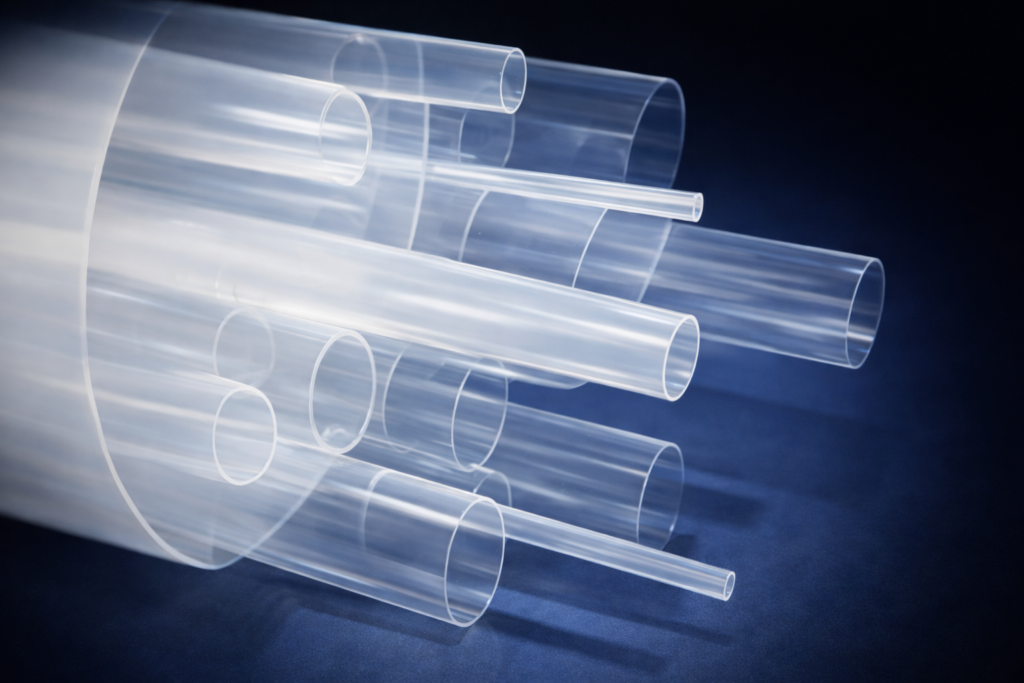
At Holscot, we specialise in delivering customised fluoropolymer solutions that meet your specific requirements. Whether you need PTFE tubing, FEP sheets, or bespoke fluoropolymer components, we have the expertise and experience to provide high-quality solutions. Contact us today to learn more about how our advanced materials can enhance your projects.