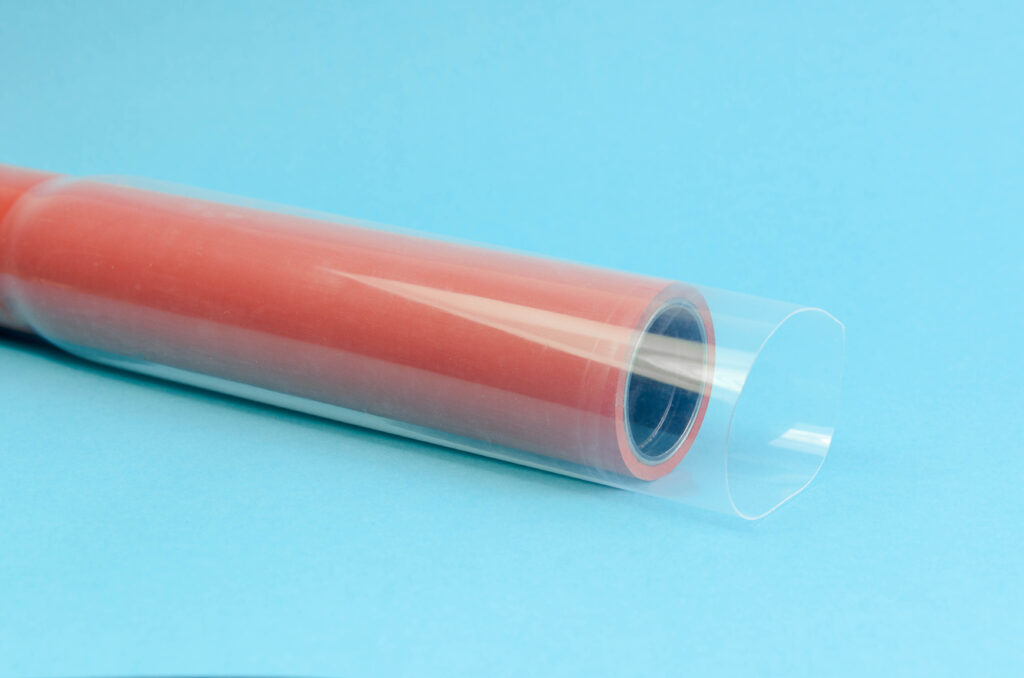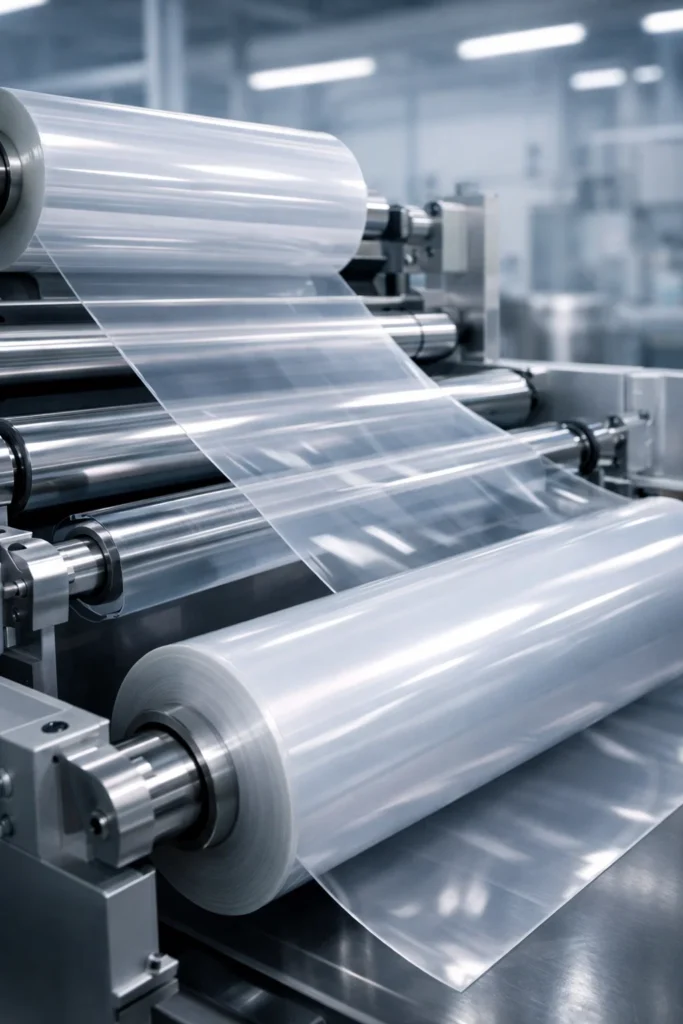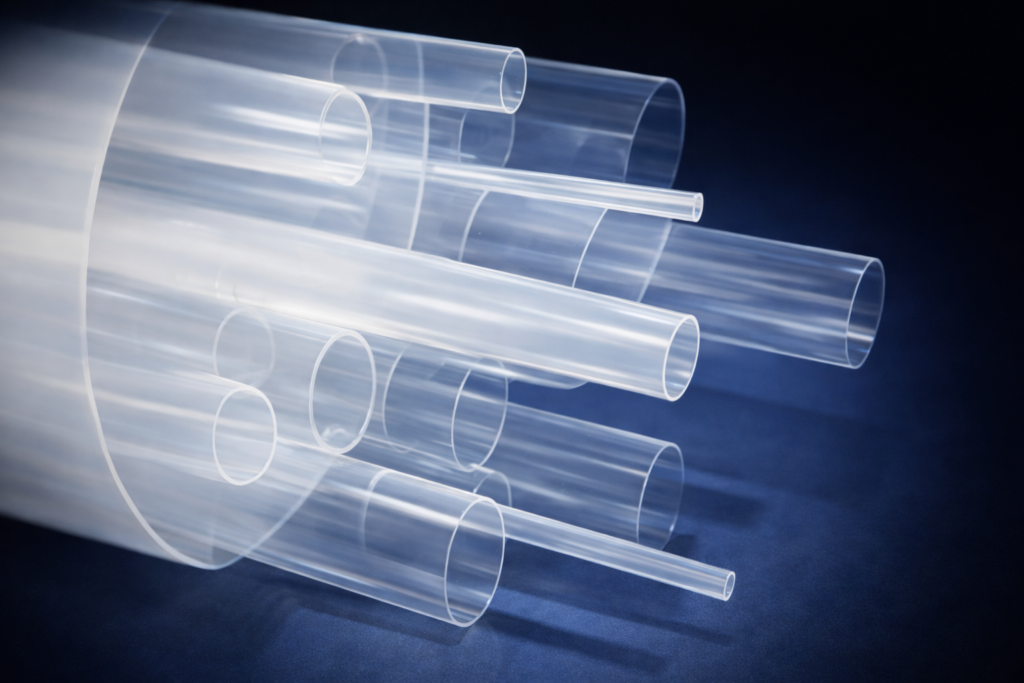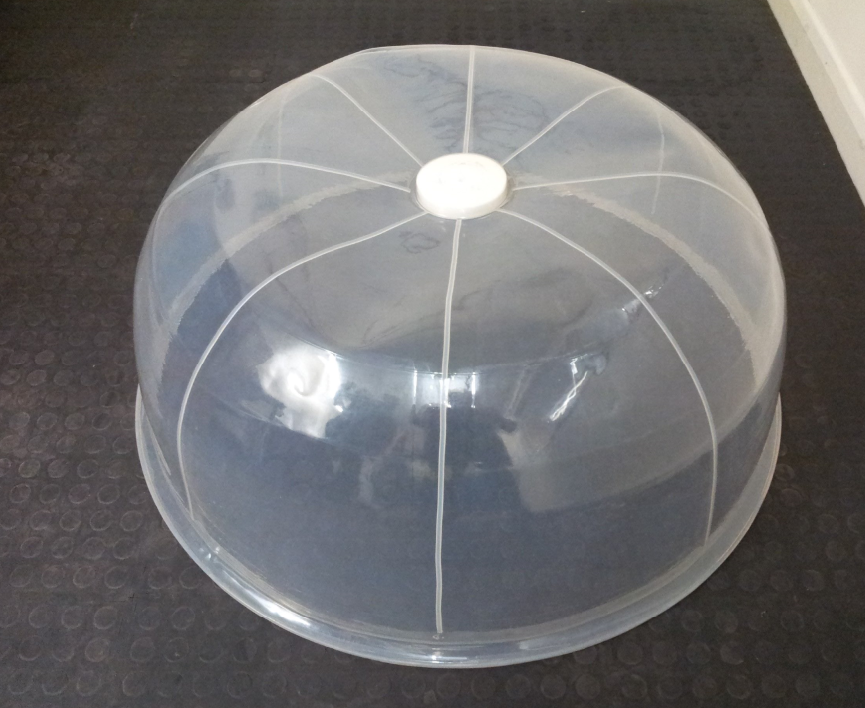

Simply put, Fluoropolymers are a group of plastics that contain carbon & fluorine. These are grouped together because the addition of fluorine gives them a number of properties that are valuable from an industrial and commercial perspective.
Fluoropolymer properties
– Chemical resistance
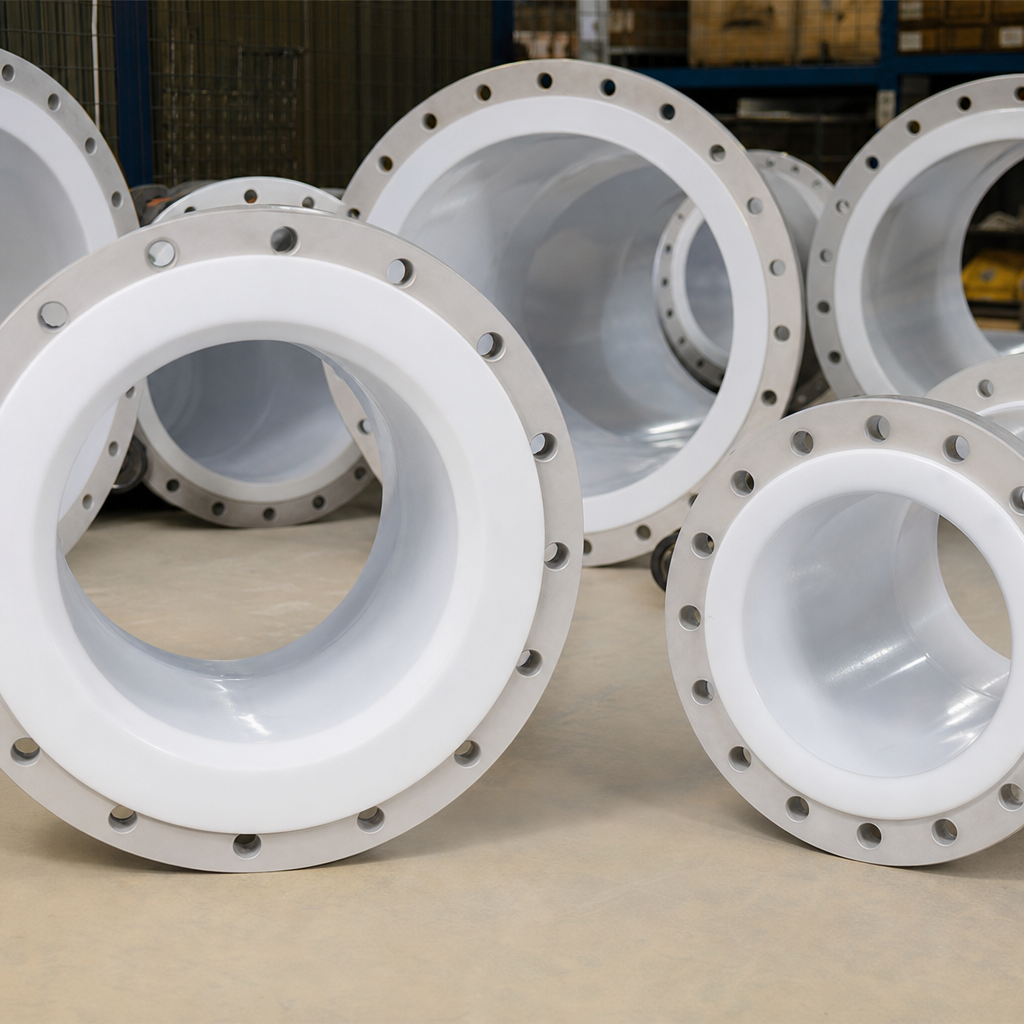
They have a very high resistance to chemicals and solvents and can thus be used in a wide range of vessels, linings & seals or to contain or store hazardous materials.
– Electrical resistance
This makes them excellent insulators for electrical wiring.
– High temperature resistance
The typical range of temperatures that Fluoropolymers cover ranges from -200 to +260 degrees Celsius
– Non-stick
This is because they shed a molecule of themselves every time something passes over them.
– Non-toxic
Their smooth surfaces are non-microbial which means that they are used in food, beverage, medical & pharmaceutical applications
Types of Fluoropolymer that we work with
The main types of Fluoropolymers (and the ones that we commonly work with) are listed below. We have aimed to give a general overview of the main properties of these plastics so that you can distinguish between them although, depending upon your needs, the choice of material may be more nuanced.
- PTFE (PolyTetraFluoroEthylene) – One of the most common brand names for PTFE is Teflon® which is synonymous with being non-stick, not reacting with other chemicals and able to work at high temperature.
- FEP (FluoroEthylenePropylene) – This fluoropolymer is similar to PTFE but it has the ability to melt which means that it is able to be processed in many more ways. It has a lower operating temperature than PTFE (up to 20 degrees Celsius) and is a sister product to PFA which can be operated at higher temperatures.
- PVDF (Poly Vinylidene Fluoride) – This is a hard plastic which can be cheap to produce and is chemically resistant.
- ETFE (Ethylene Tetra Fluoro Ethylene Copolymer) – this plastic is similar in a number of properties to PTFE but it has an increased hardness. The payoff here is that it isn’t as chemically resistant as PTFE & can’t operate at temperatures that are as high as PTFE.
- PVF (Polyvinyl Fluoride) – this is a hard and durable plastic. It is often used in solar heating panels for this purpose.
- PFA (Per Fluor Alkoxy) – This is similar to FEP (and thus PTFE) but can operate at temperatures of up to 260 degrees Celsius making it more suitable for applications in hotter environments.
- E-CTFE (Ethylene-Chloro Tri Fluoro Ethylene) – This plastic is used as a variant of ETFE and aims to offer a higher chemical resistance.
If you are not sure which type of Fluoropolymer best suits your need, we would be happy to help. Just call us on +44 (0)1234 567890, email us at sales@holscot.com or complete the contact form below.